


How Often Should You Do Microneedling? Ultimate Expert Guide For Safe & Effective Results
Your skin is one of the most powerful organs in your body, and it has a remarkable ability to heal itself. Microneedling taps directly into that natural healing power. But like any effective treatment, timing matters just as much as technique. Do it too often, and you risk damaging your skin barrier. Do it too rarely, and you won’t see the results you’re after.
This guide answers one of the most common questions in aesthetic skincare: how often should you do microneedling? Whether you’re a beauty professional, a clinic owner, or someone curious about at-home devices, you’ll find clear, expert-backed answers here.
What Is Microneedling and How Does It Work?
Microneedling, also called collagen induction therapy, is a minimally invasive skin treatment that uses fine, sterile needles to create controlled micro-injuries in the skin’s surface. These tiny punctures trigger the body’s natural wound-healing response, stimulating the production of collagen and elastin two proteins essential for firm, smooth, youthful-looking skin.
The process works in three overlapping phases:
- Inflammation phase: Immediately after treatment, the body sends growth factors and healing cells to the treated area.
- Proliferation phase: New collagen and elastin fibers are synthesized over the following days and weeks.
- Remodeling phase: Over months, the skin continues to strengthen and resurface from within.
Because the results are driven by biology, patience is key. The skin needs adequate time between sessions to complete each healing cycle before the next treatment begins.
Benefits of Microneedling For Skin Health And Beauty

Microneedling delivers a wide range of clinically studied benefits, including:
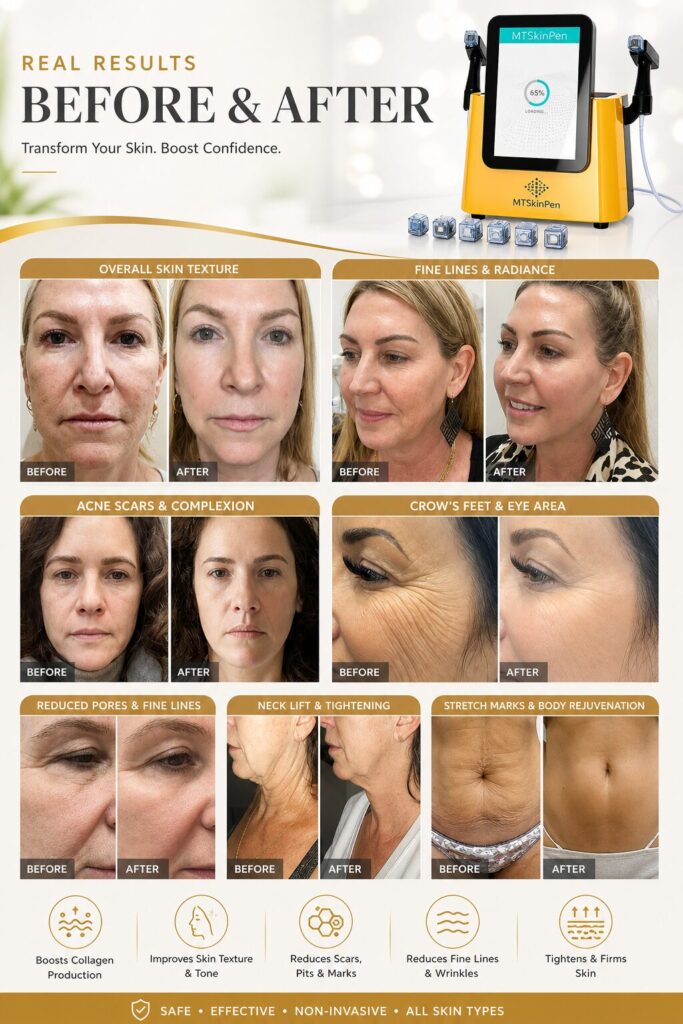
- Reduction in acne scars and post-inflammatory hyperpigmentation
- Smoothing of fine lines and wrinkles
- Improvement in skin texture and tone
- Minimizing the appearance of enlarged pores
- Reducing stretch marks
- Enhancing the absorption of topical serums and growth factors
- Stimulating hair follicles in cases of alopecia
According to the American Academy of Dermatology, microneedling is considered safe and effective for most skin types when performed correctly and at the right intervals.
How Often Should You Do Microneedling For Best Results

The short answer: most people should do microneedling every 4 to 6 weeks for professional treatments and every 1 to 2 weeks for shallow at-home rollers. However, the right frequency depends on several individual factors your skin type, the needle depth used, and the concern being addressed.
Recommended Microneedling Frequency by Skin Type
There is no universal schedule that works for everyone. Your skin’s unique characteristics play a central role in determining the ideal treatment interval.
Microneedling for Sensitive Skin
Sensitive skin types require the most conservative approach. The skin’s inflammatory response is already heightened, and over-stimulation can lead to redness, irritation, or prolonged recovery. For sensitive skin, a 6- to 8-week interval between professional sessions is recommended. At-home devices should be used with extra caution — no more than once every 2 weeks, using the shortest needle length available (0.2 to 0.3 mm). Always patch-test first and use calming, fragrance-free serums during recovery.
Microneedling for Oily and Acne-Prone Skin
Oily and acne-prone skin types can often tolerate slightly more frequent treatments, particularly when targeting active acne scarring or sebaceous hyperplasia. Professional sessions every 4 to 5 weeks are generally appropriate. However, microneedling should never be performed over active, inflamed breakouts — doing so can spread bacteria and worsen the condition. Wait until the skin is clear before scheduling a session.
Microneedling for Mature or Aging Skin
Mature skin produces collagen more slowly, meaning it takes longer to recover and rebuild between sessions. For anti-aging goals, reducing wrinkles, sagging, and loss of volume, professional microneedling every 4 to 6 weeks is ideal, with deeper needle penetration (1.0 to 2.5 mm) to reach the dermis where collagen lives. A minimum of 3 to 6 sessions is typically needed to see meaningful improvement in aging skin.
Professional vs At-Home Microneedling Frequency
The difference between professional and at-home microneedling largely comes down to needle depth and device precision.
Professional microneedling uses medical-grade devices with needles ranging from 0.5 mm to 3.0 mm. These deeper penetrations produce stronger collagen stimulation but require longer recovery time, hence the 4 to 6 week minimum between sessions.
At-home microneedling (primarily dermarollers or small pens) uses needles of 0.2 to 0.5 mm. At this shallow depth, the skin heals more quickly, allowing for more frequent use, typically every 1 to 2 weeks. However, shallow treatments also deliver subtler results and are best used for maintenance between professional sessions.
Factors That Affect Microneedling Frequency

Several variables determine how often microneedling is safe and effective for a given individual.
Needle Depth and Device Type
Needle depth is one of the most significant factors in determining treatment frequency. The deeper the needle penetrates, the more intense the healing response and the longer the skin needs to fully recover.
| Needle Depth | Treatment Type | Recommended Frequency |
| 0.2–0.3 mm | At-home maintenance | Every 1–2 weeks |
| 0.5 mm | At-home / light professional | Every 2–4 weeks |
| 1.0–1.5 mm | Professional clinic use | Every 4–6 weeks |
| 2.0–3.0 mm | Advanced professional use | Every 6–8 weeks |
Dermarollers vs Professional Microneedling Machines
Dermarollers are manual, consumer-grade tools with fixed needle lengths. They’re affordable and accessible, but they create angled punctures rather than the vertical, precise penetration of professional devices. This reduces their efficacy and increases the risk of tearing if used incorrectly.
Professional microneedling machines, such as motorized pens and fractional devices, deliver controlled, vertical needle penetration at calibrated speeds and depths. The consistency and hygiene standards of professional devices make them significantly more effective and safer for deeper treatments.
Skin Concerns Being Treated
Different skin conditions require different treatment intensities and timelines.
Acne Scars and Hyperpigmentation
Treating acne scars is one of microneedling’s most compelling applications. Atrophic scars (the depressed, pitted type) respond well to deeper needling at 1.0 to 1.5 mm. For best results, expect 6 or more sessions spaced 4 to 6 weeks apart. Combining sessions with vitamin C serums or platelet-rich plasma (PRP) can enhance pigmentation correction significantly.
Wrinkles and Fine Lines
Fine lines and surface wrinkles respond to shallower needling (0.5 to 1.0 mm) and may show improvement after just 3 sessions. Deeper wrinkles or skin laxity may require 6 to 8 sessions at higher depths. Spacing sessions 4 to 6 weeks apart allows the new collagen being formed to settle and mature before the next stimulation cycle begins.
Skin Healing Time and Recovery Process
Healing time is the single most important factor in setting your microneedling schedule. Treat it as non-negotiable. After a professional session, most people experience:
- Day 1–2: Redness and mild swelling, similar to a moderate sunburn
- Day 3–5: Skin feels tight, may experience light flaking or dryness
- Day 5–7: Surface skin looks normal, but deeper remodeling continues for weeks
Scheduling a new session before the skin has fully healed can interrupt collagen synthesis, increase the risk of scarring, and cause chronic inflammation. Always wait until the skin has completely recovered — with no lingering redness or sensitivity — before your next session.
Microneedling Treatment Timeline And Expected Results
Microneedling Treatment Timeline And Expected Results
What to Expect After Your First Session
After your first microneedling session, results are subtle. The skin may look slightly more radiant within a week as surface healing completes. However, collagen production takes time. Most patients do not notice significant improvements until after their second or third session.
Long-Term Results with Consistent Treatments
With a consistent treatment schedule maintained over 3 to 6 months, most patients report:
- Noticeably smoother skin texture
- Reduced visibility of scars and hyperpigmentation
- Firmer, more lifted appearance
- A lasting “glow” due to improved cellular turnover
After completing an initial course of 4 to 6 sessions, many practitioners recommend quarterly or bi-annual maintenance sessions to preserve results.
Safety Tips for Microneedling Treatments
Common Mistakes to Avoid
- Needling too frequently: Skipping the healing window is the most common error. More is not better in microneedling.
- Using unsterilized devices: Reusing dermarollers without proper disinfection introduces bacteria into open micro-channels.
- Applying harsh products immediately after: Retinoids, acids, and vitamin C serums (in oxidized form) should be avoided for at least 48 hours post-treatment.
- Skipping SPF: Treated skin is particularly vulnerable to UV damage. Broad-spectrum SPF 30+ is essential after every session.
When to Avoid Microneedling
Do not undergo microneedling if you have:
- Active acne breakouts, eczema, or rosacea flares
- Blood clotting disorders or are on anticoagulant medication
- Open wounds, keloid scarring, or a history of poor wound healing
- Active herpes simplex (cold sores) in the treatment area
- Pregnancy (due to lack of safety data)
Always consult a licensed dermatologist or aesthetic professional before beginning any microneedling program.
Why Choose Professional Beauty Machines From OJAN Beauty

For clinics, spas, and distributors looking to offer premium microneedling services, the quality of your device directly impacts the safety and satisfaction of every client you treat.
Advanced Technology for Superior Results
OJAN Beauty’s professional microneedling machines are engineered for precision. With adjustable needle depth, speed control, and medical-grade materials, these devices deliver consistent, reproducible results across different skin types and treatment goals. They outperform consumer-grade tools in both efficacy and safety standards.
OEM Services And Global Distribution
OJAN Beauty offers full OEM (Original Equipment Manufacturer) services, allowing businesses to brand their own line of aesthetic devices. With global distribution capabilities and compliance with international quality standards, OJAN is a reliable partner for beauty businesses at every scale — from solo practitioners to large distributors.
Trusted Supplier Since 2008
With over 15 years of experience in the professional beauty equipment industry, OJAN Beauty has established a reputation for durable, innovative, and results-driven devices. Their long track record makes them a trusted name for clinics that refuse to compromise on quality.
How to Choose the Best Microneedling Device For Your Business
Features to Look for in Professional Machines
When evaluating microneedling devices for professional use, prioritize:
- Adjustable needle depth: Essential for treating different areas and skin types
- Variable speed settings: Allows customization for sensitive vs. resilient skin
- Disposable cartridge system: Critical for hygiene and cross-contamination prevention
- Medical-grade materials: Look for titanium or surgical steel needles
- CE and FDA clearance: Confirms the device meets safety standards
- Ergonomic design: Reduces practitioner fatigue during longer sessions
Cost vs Quality: Investing in Beauty Equipment
In professional aesthetics, equipment is an investment — not just an expense. A high-quality microneedling machine that consistently delivers safe results will build client loyalty, generate referrals, and protect your reputation. Low-cost devices may seem attractive upfront but often result in inconsistent outcomes, device failure, and potential client safety issues. The cost of one adverse event far outweighs the savings on cheaper equipment.
FAQs About How Often You Should Do Microneedling
Can You Do Microneedling Every Week?
For professional treatments using needles deeper than 0.5 mm, weekly sessions are not safe. The skin has not completed its collagen remodeling cycle in just 7 days. However, very shallow at-home rollers (0.2 to 0.3 mm) may be used weekly by experienced users with resilient skin types. When in doubt, less frequent is always safer.
How Long Should You Wait Between Sessions?
The standard waiting period is 4 to 6 weeks between professional microneedling sessions. This allows complete skin recovery, supports collagen maturation, and ensures each session builds on the results of the last rather than interrupting the healing process.
Is Microneedling Safe for All Skin Types?
Microneedling is broadly safe for Fitzpatrick skin types I through VI. Darker skin tones (types IV–VI) should exercise caution with deeper needling depths, as they carry a higher risk of post-inflammatory hyperpigmentation (PIH). Using lower depths, performing fewer passes, and applying appropriate post-care products reduces this risk significantly.
According to the American Academy of Dermatology, microneedling is considered a safe and effective treatment for most skin types when performed by a trained professional.
Does Frequent Microneedling Damage Skin?
Yes, excessively frequent microneedling can damage the skin. Over-treatment disrupts the collagen synthesis cycle, leads to chronic inflammation, compromises the skin barrier, and may cause scar tissue formation. The key is respecting the skin’s natural healing timeline.
How Many Sessions Are Needed for Visible Results?
Most people see initial improvements after 2 to 3 sessions. However, for significant results, especially for acne scars or deep wrinkles, a full course of 4 to 6 sessions spaced 4 to 6 weeks apart is recommended. Results continue to improve for up to 6 months after the final session as new collagen matures.
Can Microneedling Be Combined with Other Treatments?
Yes. Microneedling is frequently combined with:
- PRP (Platelet-Rich Plasma): Applied immediately after needling for amplified healing and collagen stimulation
- Hyaluronic acid serums: Enhance hydration and plumping effect through open channels
- RF (Radiofrequency) microneedling: Adds thermal energy for tighter skin and deeper remodeling
- Chemical peels: Performed in alternating sessions (not the same day) to enhance skin resurfacing
Always consult a licensed professional before combining treatments to ensure safety and compatibility.
Final Thoughts:
Microneedling is one of the most scientifically validated, versatile, and effective skin rejuvenation treatments available today. But its success depends entirely on one thing: respecting the process.
The right microneedling frequency is not about doing more, it’s about doing it smart. For most people, professional sessions every 4 to 6 weeks, combined with gentle at-home maintenance, deliver the best long-term results without compromising skin health.
Work with a qualified practitioner who can assess your skin, customize your depth and frequency, and guide your aftercare. Whether your goal is clearing acne scars, reversing signs of aging, or simply achieving a more radiant complexion, a consistent, well-planned microneedling schedule will get you there safely and effectively.