

What Is the Difference Between HIFU and Ultherapy?
If you’ve spent any time researching non-surgical face lifting, you’ve probably seen both names thrown around almost interchangeably. Clinic menus list them side by side, marketing pages compare them directly, and most people walk away assuming they’re either the same thing or so similar it doesn’t matter which one they book. That assumption isn’t quite right, and understanding why helps explain a lot about how the modern skin tightening market actually works.
The Shared Mechanism Behind Both Treatments
Ultherapy and HIFU both rely on ultrasound energy to heat tissue beneath the skin’s surface, deep enough to reach the dermis and, in many cases, the SMAS layer (the same structural layer surgeons work with during a traditional facelift). That controlled heat, typically in the 60 to 70 degree Celsius range, disrupts old tissue just enough to trigger the body’s repair response. The result is fresh collagen and elastin production over the following weeks and months, which gradually firms and lifts the treated area without a single incision.
So at the most basic level, yes, they’re doing the same job through the same general mechanism. That’s exactly why people lump them together. But the way each one actually delivers that energy, and what that means for the treatment itself, is where the real differences show up.
Ultherapy Is a Specific, Branded Technology
Ultherapy is a registered, FDA-cleared device developed specifically for non-invasive skin lifting. It uses what’s called micro-focused ultrasound with visualization, often shortened to MFU-V. The “with visualization” part is the key feature: Ultherapy includes real-time ultrasound imaging, so the practitioner can actually see the layers of tissue being treated on a screen as they work.
That imaging changes the experience in a meaningful way. Instead of estimating depth and hoping the energy lands where intended, the practitioner can visually confirm they’re targeting the right structures and steering clear of bone, major blood vessels, or anything else that shouldn’t be in the path. It’s part of why Ultherapy has built a reputation as the more clinically conservative, tightly regulated option, and why it commands a higher price point in most markets.
Inside the HIFU Category
HIFU stands for high-intensity focused ultrasound, and it’s best understood as the general technology category rather than a single product. Dozens of manufacturers worldwide, including many based in Korea and China, produce HIFU devices that use the same underlying physics as Ultherapy: focused ultrasound beams that generate heat at a targeted depth to stimulate collagen.
The major practical difference is that most HIFU machines don’t include real-time imaging. The practitioner selects a treatment depth using interchangeable cartridges or probes, then delivers the energy without being able to visually confirm exactly what’s happening beneath the surface as they go. This has earned generic HIFU the nickname “blind” treatment in some clinical circles, though in practice, trained practitioners using quality equipment and following standard depth guidelines achieve consistent, predictable results without needing live imaging for every pass.
Where the Two Actually Diverge
A few concrete differences tend to matter most when people are choosing between them:
Imaging and precision: Ultherapy’s DeepSEE visualization lets practitioners confirm tissue depth in real time. HIFU devices rely on preset depth settings and practitioner experience instead, which is effective but less individually verified pass by pass.
Regulatory status: Ultherapy carries specific FDA clearance for the brow, neck, chin, and décolletage. HIFU machines vary widely in certification depending on the manufacturer and region, so it’s worth checking a specific device’s documentation rather than assuming blanket approval.
Cost: Ultherapy treatments typically run several thousand dollars per session due to the proprietary technology and per-use applicator costs. Generic HIFU sessions are usually a fraction of that, which is a major reason HIFU has become the more accessible, widely adopted option in salons and medspas globally.
Sessions and timeline: Ultherapy is often marketed as a single comprehensive treatment with results building over two to three months. HIFU frequently uses a similar timeline but may call for a follow-up session or two to reach a comparable level of lift, depending on the device’s power and the treatment area.
Comfort: Both treatments involve some discomfort since they’re working at depth, but patient reports vary. Some describe Ultherapy as more intense, particularly along the jawline, while HIFU is often described as more tolerable, closer to mild cramping than sharp discomfort. Numbing cream and practitioner technique make a noticeable difference either way.
Results duration: Both deliver lifting effects that build gradually and typically last 12 to 18 months, sometimes longer with maintenance sessions. Neither is permanent, since the underlying aging process continues regardless of treatment.
Who Tends to Be a Good Candidate
Both treatments work best on people with some skin elasticity left, typically those in their late 30s to 50s with early jowling or a softening jawline, since collagen production is still responsive. Advanced, significantly sagging skin sees only modest improvement, since neither treatment removes excess tissue like surgery does, so a consultation helps set realistic expectations first. Aftercare is minimal: no downtime or bandages, just avoiding harsh actives and sun exposure for a few days. Redness or swelling settles within a day or two, while real lifting builds gradually as new collagen forms.
So Which One Is Actually “Better”?
This is really a budget and goals question more than a pure efficacy one. For people with moderate to significant skin laxity who want a single, well-documented treatment backed by the most extensive body of clinical research, Ultherapy’s track record and FDA clearance make it the more conservative choice, at a correspondingly higher price.
For people with mild to moderate sagging who want a more affordable, accessible option, especially as a preventive or maintenance treatment, quality HIFU devices deliver comparable collagen stimulation at a fraction of the cost. The tradeoff is that results depend more heavily on the specific machine’s power and the practitioner’s skill, since there’s no live imaging acting as a built-in safety check.
For clinics and medspas, this distinction also shapes the business decision. Ultherapy requires licensing the branded device and consumable applicators, which comes with a significant upfront and ongoing cost. A professional-grade HIFU machine, by contrast, is a one-time equipment investment that can be used on an unlimited number of clients, which is a major part of why HIFU has become one of the highest-ROI categories in the aesthetics equipment market.
HIFU Equipment From Ojan Beauty
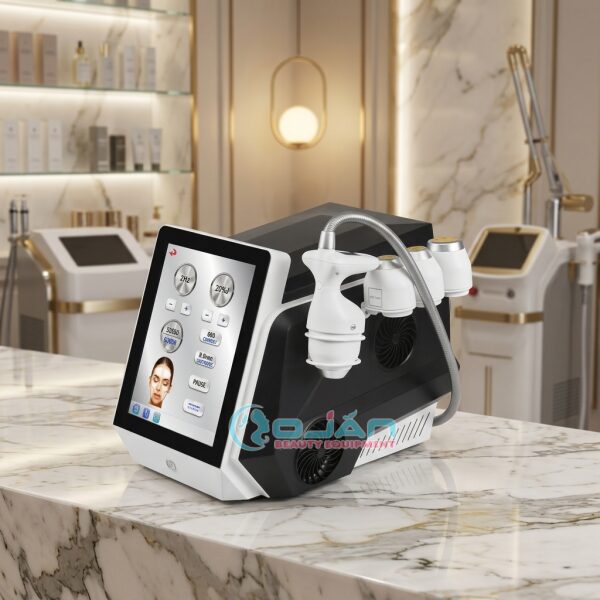
For clinics and salons building out a non-surgical lifting menu, Ojan Beauty manufactures professional HIFU systems designed to deliver the depth control and consistency that make HIFU treatments effective without the cost structure of a branded device.
Professional 12D HIFU ICE Face Lifting & Skin Tightening Machine delivers ultrasound energy across nine distinct depths, from 1.5mm at the epidermis down to 16mm in the fat layer, letting practitioners target everything from fine surface lines to the SMAS layer and deeper fat tissue with the same machine. It pairs that range with semiconductor cooling technology that keeps the probe between 1 and 5 degrees Celsius during treatment, which protects the skin’s surface and keeps the experience closer to a cool, mildly warm sensation than a painful one. For clinics, the multi-depth design means one device covers facial lifting, wrinkle reduction, and body contouring without needing separate machines for each service.

Professional 12D HIFU ICE Face Lifting & Skin Tightening Machine
6 In 1 Liposonic 4D HIFU Facial With Radar Carving & RF + Body Slimming Machine combines 4D HIFU with radar carving for fine facial lines, Liposonic technology for fat reduction, and gold RF for general skin rejuvenation in a single system. The radar carving function in particular is built for delicate, detailed areas like the forehead and under-eyes, where precision matters more than raw power. For a clinic weighing whether to invest in one specialized machine or one that covers multiple treatment categories, this kind of multi-functional setup tends to offer a stronger return since it can serve a wider range of client requests without additional equipment purchases.

6 In 1 Liposonic 4D HIFU Facial With Radar Carving & RF + Body Slimming Machine
The Bottom Line
HIFU and Ultherapy aren’t competing technologies as much as they’re different points on the same spectrum. Ultherapy is a specific, branded, FDA-cleared device with built-in imaging and a premium price tag to match. HIFU is the broader category it belongs to, encompassing a wide range of devices that use the same focused ultrasound principle at a more accessible cost. Neither is universally “better,” since the right choice depends on budget, the severity of skin laxity being treated, and whether real-time imaging is a priority worth paying for.
For clinics and beauty professionals deciding how to build out their non-surgical lifting services, exploring Ojan Beauty’s full HIFU equipment range is a practical next step toward finding a device that matches both the treatment depth and the budget the business actually needs.