

Pressotherapy vs. Manual Lymphatic Drainage: Which Is More Effective?
A client with swollen ankles may be offered inflatable boots. Another may lie under a light sheet while a therapist works with slow hand movements across the skin. Both treatments are described as lymphatic drainage, yet the experience, control, and best use cases differ.
Manual lymphatic drainage, or MLD, is a hands-on technique performed by a trained practitioner. Pressotherapy uses intermittent pneumatic compression, with air chambers that inflate in sequence around the legs, waist, arms, or torso. Each method can ease heaviness and support fluid movement, but neither deserves a blanket “better” label.
The deciding factors are the cause of swelling, tissue sensitivity, changes after surgery, treatment frequency, and whether the client needs close therapist contact or prefers a repeatable machine-led session.
Two Routes Into the Same Problem
Lymph does not move through the body with a central pump in the way blood does. It relies on muscle movement, breathing, vessel contractions, and pressure changes around the tissues. When fluid collects faster than it clears, the area may feel tight, puffy, heavy, or stiff.
MLD and pressotherapy both influence that movement from outside the body, but their methods are quite different.
A therapist stretches the skin gently and directs fluid toward functioning pathways. The touch is lighter than many people expect, and treatment usually begins closer to the trunk before moving toward the congested area.
Pressotherapy operates mechanically, using controlled air pressure to gently compress your limbs. A garment wraps around the body, then separate chambers tighten and release. The pattern often starts at the feet and travels upward, creating a rolling squeeze rather than one continuous clamp.
Neither method “flushes toxins” in the dramatic sense used in advertising. The realistic aim is controlled fluid movement, less pressure in swollen tissue, and support for venous and lymphatic return.

What Skilled Hands Can Do That A Sleeve Cannot
Manual lymphatic drainage is shaped in real time. A therapist can feel whether tissue is soft, fibrotic, tender, warm, unusually firm, or different from the opposite side, then change the session accordingly.
The practitioner may spend longer around a scar, alter the direction of a stroke, avoid irritated skin, or stop when the response looks wrong. This is where MLD earns its place in post-operative and medically supervised care.
The Treatment Feels Almost Too Gentle At First
Clients expecting deep kneading are often surprised. MLD uses slow skin-stretching movements rather than pressure aimed at muscle. The therapist’s hands may pause, repeat a small sequence, then move several centimetres and begin again.
There is no pump noise and no sensation of being enclosed, which can suit clients who dislike compression garments. The quiet pace is relaxing, but its greater value is adaptability around scars, numb areas, and uneven swelling.

Where Manual Work Usually Has The Edge
MLD is often the stronger choice when treatment needs to be highly selective, including:
- Swelling concentrated around an incision or scar
- One limb that differs noticeably from the other
- Altered drainage routes after lymph node surgery
- Tender tissue that cannot tolerate uniform pressure
- Clients who need close visual and hands-on monitoring
Skilled sessions take time, cost money, and depend on practitioner training. Regular care can become difficult when travel, scheduling, and fees begin to stack up.
For lymphedema, MLD usually sits inside a wider plan that may include compression garments, exercise, skin care, and medical follow-up.
When Air Chambers Take Over
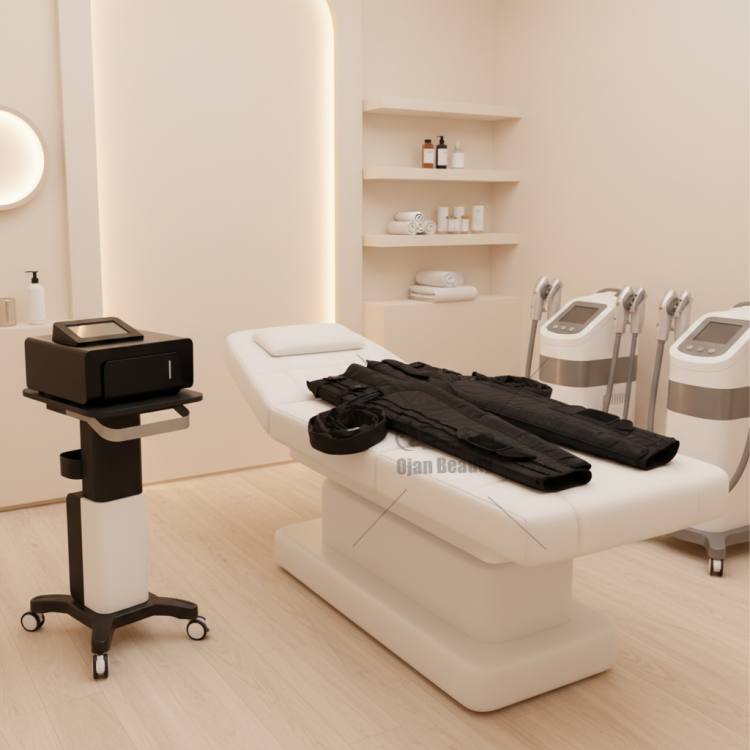
Pressotherapy replaces continuous hand contact with a programmed pressure cycle. The client wears boots, trousers, sleeves, or a full-body garment connected to a console. Once the fit is checked, the machine inflates one section after another.

This treatment applies noticeably firmer physical pressure than gentle manual lymphatic drainage. A chamber closes around the ankle, holds briefly, then another fills around the calf. Well-designed systems create a smooth upward wave that repeats with the same timing.
What The Machine Is Actually Doing
Intermittent pneumatic compression applies external pressure to a limb in stages. This can support venous return, reduce temporary pooling, and encourage fluid away from areas where it has collected.
A machine does not tire, vary its hand pressure, or shorten the final minutes. Once settings are chosen, each cycle follows the same pattern.
Modern units may allow operators to adjust:
- Pressure level and session time
- Active body zones
- Inflation and release sequence
- Heat or electrical muscle stimulation
A garment cannot feel a tender scar or notice that one foot has become cold. Proper initial screening, accurate garment sizing, and ongoing patient monitoring remain critical for effective care.
Why Some Clients Prefer It
Pressotherapy can treat both legs at once and cover a large area without an hour of hands-on work. For routine leg heaviness, post-training fatigue, or mild fluid retention after travel, that convenience is attractive.

The session is predictable, and clinics can repeat the same protocol before adjusting it as tolerance changes.
Where The Difference Shows Up In Real Life
The fairest comparison begins with the reason for treatment. A runner with tired calves, a client recovering from liposuction, and a patient with diagnosed lymphedema should not receive the same recommendation.
After Surgery Or With Diagnosed Swelling
Manual treatment often takes priority when anatomy has changed or swelling is uneven. A therapist can redirect fluid around an affected region, work carefully near incisions, and reduce pressure as soon as tissue reacts badly.
Pressotherapy may still have a place after professional assessment and within a broader plan. High pressure is not a shortcut; in vulnerable tissue, it may cause pain, bruising, or an unhelpful fluid shift.
For medical lymphedema, neither massage nor a machine session should stand alone. Ongoing compression, movement, skin care, and clinician guidance remain part of management.
For Heavy Legs, Travel, And Training Recovery
Pressotherapy often feels more practical when the issue is broad rather than localized. Both legs can be treated together, and the repeated wave may feel pleasant after long periods of sitting or demanding training.
MLD can still work well, especially for clients who prefer hands-on care. The difference is efficiency: a machine covers both legs with the same rhythm, while the therapist divides attention between areas.
Time, Cost, And Repeatability
Manual sessions cost less than buying equipment, but repeated appointments can become expensive over months. Pressotherapy carries a higher upfront cost for a clinic or home user, followed by a lower cost per session with regular use.
The trade-off is fairly clear:
- MLD offers closer observation and more precise adaptation.
- Pressotherapy offers speed, repeatability, and easier routine use.
- MLD depends heavily on practitioner skill.
- Pressotherapy depends on fit, programming, and screening.
- A combined plan may suit people who need targeted care plus regular compression.
What The Rest Of The Day Looks Like
Neither treatment normally requires downtime. After MLD, clients may feel relaxed, thirsty, or ready to use the restroom, while pressotherapy can leave temporary garment lines and a light, almost floaty feeling in the legs.
Gentle walking is usually comfortable after either method. New pain, marked swelling, skin colour changes, breathlessness, or persistent numbness should not be dismissed as a normal drainage response.
Two Machines That Show How Pressotherapy Changes by Setting
Proper initial screening, accurate garment sizing, and ongoing patient monitoring remain critical for effective care. Chamber count, garment design, airflow, pressure range, heat, and controls all affect how a session feels and where the unit fits best.
Professional 3 In 1 Pressotherapy Machine | Lymphatic Drainage Air Pressure Suit With EMS & Infrared Therapy For Effective Weight Losss
This platform combines intermittent pneumatic compression with far-infrared heat and eight pairs of EMS pads. Its specifications describe 16 to 24 air chambers, adjustable pressure, infrared heating, and electrical muscle stimulation.

A medical spa can run compression alone, add warmth for comfort, or introduce EMS when muscle stimulation suits the service. Clinics offering body treatments and recovery sessions can use one console for several appointment types.
Configuring these additional features demands precise step-by-step preparation to ensure everything works properly. Heat, pressure, and EMS should be adjusted separately, and clients need to know which sensations to expect before treatment begins.
Factory Direct 24 Chambers 5 Different Massage Mode Pressotherapy Body Slimming Lymphatic Drainage Pressotherapy Machine
This machine focuses on pneumatic compression. Its 24 chambers are arranged in groups of three, and the system offers multiple sequential modes with adjustable treatment time and pressure.

The grouped layout can create a continuous rolling sensation across the garment. For clinics seeking dedicated leg compression for recovery or post-treatment support, that focus may be more useful than a long list of extra functions.
Its wide pressure capacity gives trained operators room to adapt the session, yet the upper limit is not a recommended setting. Most clients need tolerable compression, not the strongest cycle available.
The Better Choice Changes With the Person
Manual lymphatic drainage is usually the better fit when swelling is uneven, tissue is sensitive, surgery has changed normal drainage, or close clinical observation is needed. Pressotherapy is often more convenient for broad leg heaviness, routine recovery, and clients who value repeatable treatment at a predictable cost.
A therapist can handle areas requiring judgment, while pressotherapy provides regular mechanical support between appointments. The answer changes with the body in front of you, which is why the strongest machine and longest massage are poor deciding points.