

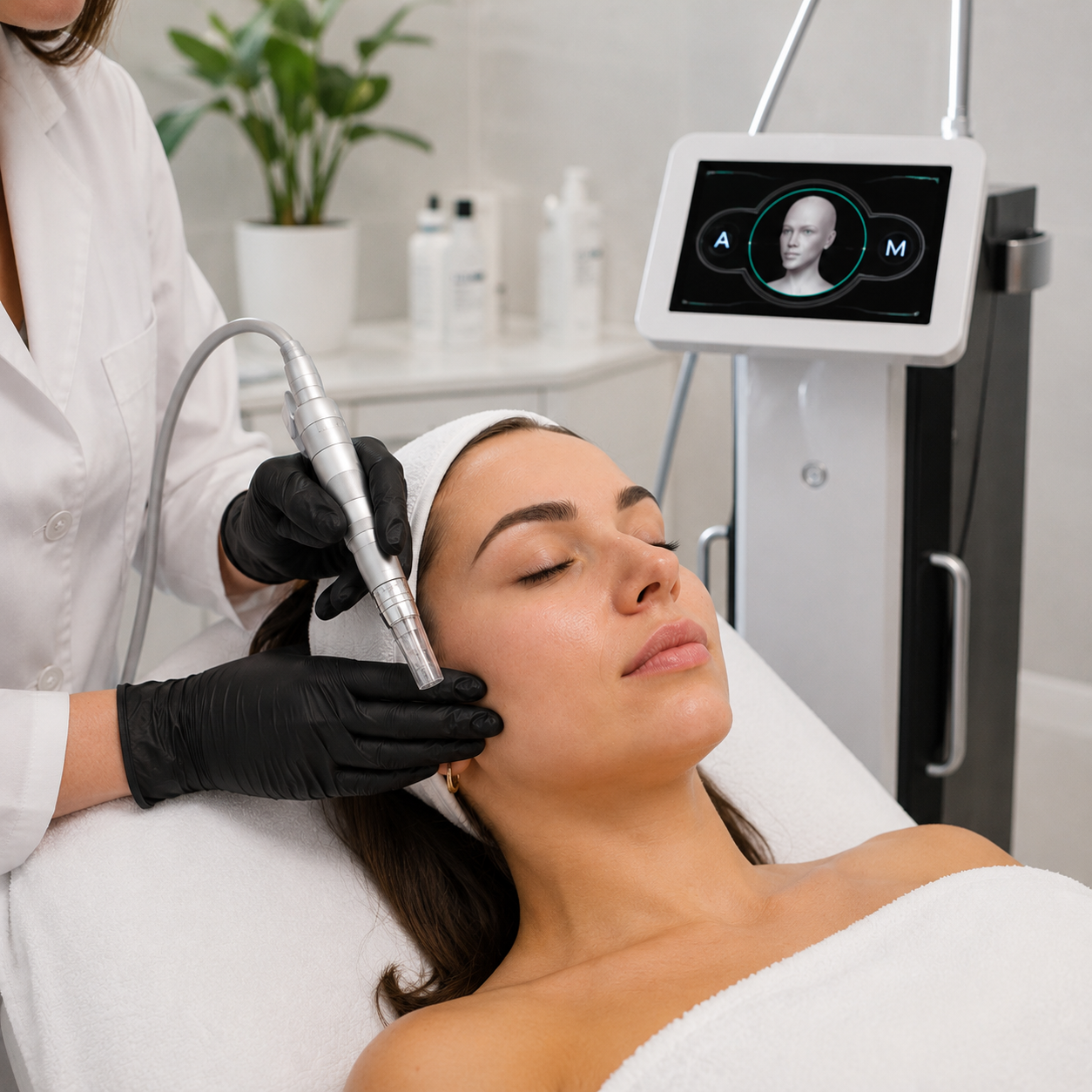
Microneedling Aftercare: The Complete Guide Your Clients Actually Need
If you sell, distribute, or import microneedling equipment, you already know the machine is only half the business. The other half is what happens after the treatment chair, because a client’s results, their referrals, and whether they trust the salon (and the equipment behind it) enough to book again all come down to aftercare.
At OJAN Beauty, we’ve spent years supplying microneedling devices to salons, medspas, and clinics across dozens of countries. One pattern shows up everywhere, regardless of market: the salons with the fewest complaints and the highest repeat-booking rates are the ones that hand clients a clear, written aftercare protocol, not a rushed verbal summary at checkout. This guide is built so resellers and distributors can pass it straight to their salon and clinic customers, or use it as a reference when training new buyers on how to support the equipment they’ve purchased.
We’ve grounded every claim below in peer-reviewed dermatology literature and guidance from the American Academy of Dermatology (AAD), not just industry convention. Links to every source are listed at the end.
Key Takeaways
- Redness typically fades within 24 to 48 hours; deeper collagen remodeling continues for several weeks.
- Clients should avoid washing with cleanser (water-only is generally fine) for roughly the first 24 hours, and skip makeup for at least 24 to 48 hours.
- Sun protection is non-negotiable for at least two weeks post-treatment.
- Retinoids, vitamin C, and exfoliating acids should be paused for about a week.
- Most visible side effects resolve within 5 to 7 days; full results build over 4 to 8 weeks as collagen remodels.
- Needle depth, device quality, and sterilization, all equipment-dependent factors, directly affect how aggressive or gentle a client’s aftercare needs to be.
What Is Microneedling and Why Aftercare Matters

Microneedling, also called percutaneous collagen induction therapy, uses fine, sterile needles to create controlled micro-injuries in the skin. The body responds to these tiny wounds the same way it responds to any injury: by ramping up blood flow, triggering inflammation, and eventually laying down new collagen and elastin. A 2024 dermatology review in Cureus describes this process clearly. The micro-injuries are deliberately confined to the dermis, sparing the epidermis, which is exactly what lets the skin heal quickly while still stimulating meaningful collagen remodeling (Jaiswal & Jawade, 2024).
This is also why aftercare isn’t optional or generic. The skin is, quite literally, in an open-wound healing state for the first 24 to 72 hours. What a client does, or doesn’t do, during that window determines whether they get smooth, even results or complications like infection, prolonged redness, or post-inflammatory hyperpigmentation.
Professional vs. At-Home Devices: Why Depth Changes Everything
Not all microneedling is equal, and neither is the aftercare it requires. Professional-grade devices, the kind salons and clinics purchase through equipment suppliers, allow controlled, adjustable needle depth, typically from 0.5mm up to 2.5mm or more, depending on the treatment goal and skin area. At-home rollers rarely exceed 0.3mm for safety reasons.
This matters for aftercare guidance because deeper professional treatments create more significant micro-channels, longer visible healing, and a narrower margin for error on hygiene. A salon running a 1.5mm RF microneedling session needs to give clients a noticeably stricter aftercare protocol than a spa offering a light 0.25mm refresher treatment. Resellers training new salon owners should make this distinction explicit. The aftercare sheet should match the treatment depth, not be copy-pasted from a generic template.
The Three Phases of Skin Healing After Microneedling
Understanding the biology helps salons explain symptoms to clients instead of just listing rules. Healing generally moves through three overlapping phases:
Inflammation (roughly days 0 to 3): Redness, warmth, and mild swelling appear as the body sends blood flow to the treated area. This is normal and expected, not a sign of a problem.
Proliferation (roughly days 3 to 7): New skin cells and blood vessels form. Tightness, dryness, and light flaking are common here as the surface layer rebuilds.
Remodeling (weeks 2 to 8): This is where the real payoff happens. Collagen fibers reorganize and strengthen, gradually improving texture, tone, and firmness. Clinical literature on percutaneous collagen induction notes that visible skin quality improvements continue well beyond the first week, which is why clients shouldn’t judge results too early (Iosifidis & Goutos, 2019).
Microneedling Aftercare Timeline: Day by Day
Hours 1 to 24: Immediate Aftercare
Right after treatment, skin looks and feels like a moderate sunburn, red, tight, and warm. Clients should:
- Avoid cleanser entirely for the first several hours; rinse with cool water only if needed.
- Skip makeup completely for at least 24 hours to avoid clogging the open micro-channels.
- Apply only the post-treatment product the salon provides. No other serums, no exfoliants.
- Use a cold compress in short intervals if there’s discomfort or swelling.
- Avoid touching the face with unwashed hands.
Day 2 to 3: Managing Dryness and Tightness
Redness usually starts fading, but dryness and tightness peak here. Recommend a gentle, fragrance-free cleanser (AM/PM) and a simple hydrating moisturizer. This is not the time to reintroduce actives, no matter how “gentle” a client thinks their regular serum is.
Day 4 to 5: Reintroducing Light Skincare
Mild flaking is common and completely normal. Clients should never pick at it. Light, mineral-based makeup is usually safe by day 3 to 4 if skin isn’t still irritated. This is also a natural point to remind clients they may resume their normal cleanser (still nothing with acids or retinol).
Day 6 to 7: Barrier Recovery
By the end of the first week, most visible side effects have resolved for standard-depth treatments. Deeper RF microneedling may take slightly longer. Skin should look noticeably smoother and less reactive.
Week 2 to 4: Collagen Remodeling Begins
This is when clients start noticing the difference microneedling was actually sold on: finer lines, tighter pores, more even tone. Sun protection remains critical through this entire window, since new collagen is especially vulnerable to UV damage.
Weeks 4 to 8: Long-Term Results
Full collagen remodeling can take up to two months. Salons should set this expectation at the time of booking, not after the treatment, so clients don’t judge the service based on day 3 results and leave a disappointed review.
Can Clients Wash Their Face After Microneedling?

This is the single most common aftercare question, and it deserves a direct answer: generally, wait a few hours to rinse with plain lukewarm water, and hold off on cleanser for roughly 24 hours. This gives the microchannels time to begin closing, reducing the chance that tap water or product residue introduces bacteria into freshly opened skin.
When cleansing does resume, technique matters as much as timing:
- Use only clean fingertips. No washcloths, brushes, or exfoliating pads.
- Lukewarm water only, never hot.
- Pat dry with a clean towel; never rub.
What to Use and What to Avoid: Aftercare Product Guide
| Category | Avoid | Recommended |
|---|---|---|
| Cleanser | Foaming cleansers, exfoliating beads, fragrance | Gentle, soap-free, fragrance-free formulas |
| Serum | Retinol, vitamin C, glycolic/salicylic acid | Hyaluronic acid, peptides, soothing growth factors |
| Moisturizer | Heavy occlusive balms with fragrance or alcohol | Ceramide-based, lightweight, fragrance-free |
| Sunscreen | Chemical filters (can sting compromised skin) | Mineral (zinc oxide/titanium dioxide) SPF 30+ |
| Makeup | Any product, first 24 to 48 hours | Clean brushes/sponges, mineral formulas after 48 hrs |
Retinoids, AHAs/BHAs, and vitamin C are paused because they’re formulated to exfoliate or accelerate cell turnover, exactly the wrong instruction to give skin that’s already in an active wound-healing state. Reintroducing them too early is one of the most common causes of prolonged irritation salons report.
Sun Protection After Microneedling

New collagen is fragile, and UV exposure degrades collagen and elastin at the molecular level, the opposite of what the treatment is meant to achieve. Clients should:
- Apply mineral SPF 30+ daily, reapplying every 60 to 90 minutes if outdoors.
- Avoid direct sun exposure for at least two weeks (longer is better).
- Skip tanning beds and self-tanner entirely during this window.
The AAD reinforces this point broadly for all professional skin procedures, noting that daily sunscreen use is essential to protecting skin health after treatments that disrupt the surface barrier (American Academy of Dermatology).
Activity and Lifestyle Restrictions
- Exercise/sweating: Avoid for 24 to 72 hours. Sweat can irritate open channels and increase infection risk.
- Saunas, steam rooms, hot tubs, swimming pools: Avoid for at least 3 days; chlorinated or shared water carries bacterial risk.
- Shaving: Wait at least 3 days on treated areas, longer if skin still feels sensitive.
Nutrition And Recovery Support

This is a section most competitor content skips entirely, but it’s worth including because collagen synthesis is a nutrient-dependent process, not just a topical one.
- Hydration: Adequate water intake supports skin plumpness and lymphatic drainage during healing.
- Vitamin C and zinc: Both play documented roles in collagen synthesis and wound healing, through diet or supplementation, as appropriate.
- Sleep: Deep sleep is when the body produces growth hormone and prioritizes tissue repair, including skin.
- Stress management: Chronic stress elevates cortisol, which can slow healing and worsen inflammation.
Salons don’t need to turn this into a lecture. A simple printed reminder alongside the timeline is usually enough.
Special Considerations for Skin Tone and Sensitivity
Clients with darker skin tones face a measurably higher risk of post-inflammatory hyperpigmentation (PIH) after aggressive energy-based treatments, including RF microneedling, if settings are too aggressive or aftercare is neglected. This is a point the AAD has specifically flagged in guidance around energy-based device safety, noting that certain patient factors, including darker skin types, carry elevated PIH risk when device settings aren’t properly customized (Healio/AAD commentary, 2025).
Practical takeaways for salons: use more conservative depth/energy settings on darker skin tones, be extra strict about sun avoidance, and consider recommending a brightening (non-irritating) serum only after the first week, once skin has fully re-barriered.
Clients with active rosacea, cystic acne, or eczema flares should generally be treated more conservatively or rescheduled. Treating inflamed skin increases complication risk regardless of skin tone.
Signs of a Problem: When to Contact a Provider
Most post-treatment symptoms are normal and expected. Clients should be told, clearly and in writing, which symptoms are not:
- Fever, or pain/redness that worsens instead of improving after 48 hours
- Yellow or green discharge from treated areas
- Hives, spreading rash, or sudden severe itching
- Excessive or delayed bleeding
Infections after microneedling are uncommon in professional settings but do occur, most often when equipment isn’t properly sterilized or aftercare instructions are ignored. This is precisely why device hygiene protocols and single-use needle cartridges matter as much as the aftercare sheet itself. Resellers can use this point constructively in sales conversations: proper equipment (sterile, single-use tips, adjustable depth control) reduces the aftercare burden and the liability risk for the salon.
Most redness fades within 24 to 48 hours. Deeper professional treatments may take slightly longer, up to 3 to 5 days in some cases.
Water-only rinsing is generally fine after a few hours; cleanser should typically wait about 24 hours to let micro-channels begin closing.
Most guidance recommends waiting at least 24 to 48 hours, and using clean brushes or sponges with mineral-based products once resumed.
Early smoothness can appear within a week, but full collagen remodeling and visible improvement in texture and fine lines typically takes 4 to 8 weeks.
Yes, mild flaking is a normal part of surface renewal. Clients should be told not to pick at it and let it shed naturally.
The Bottom Line For Resellers And Salon Partners
A microneedling device is only as good as the protocol behind it. Salons that hand clients a clear, science-backed aftercare guide see fewer complaints, better results, and stronger repeat business, which in turn reflects well on the equipment supplier behind the machine. For distributors and resellers, sharing a resource like this with new salon customers isn’t just good service. It’s a quiet way to reinforce that Ojan Beauty stands behind the full lifecycle of the treatment, not just the hardware.
