Lipo Laser and EMS: What Does Each Technology Do During Body Contouring?
A distributor comparing two body-contouring quotes often sees the same pattern. One machine has twelve laser pads and an EMS function. The other costs less and does one job. On a spec sheet, the combined unit looks like the obvious winner, yet the two technologies do very different things, and a long feature list says little about either. Lipo laser and EMS are often sold together, so it helps to know what each is meant to do, what evidence exists, and what a buyer should confirm before treating a combination as a bigger offer.

What the Laser Side Does
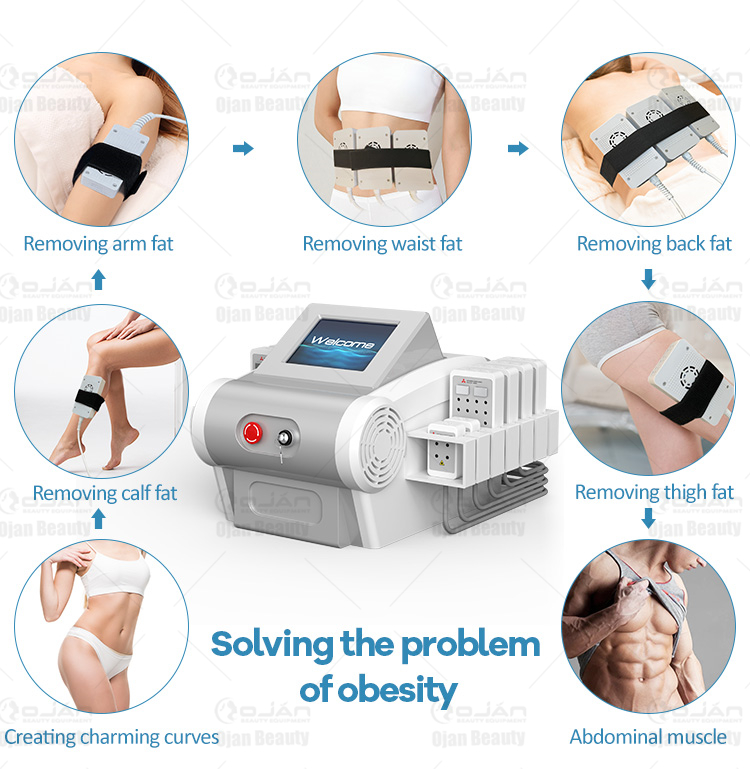
Lipo laser systems use low-level light delivered through flat pads that sit on the skin. This approach is often called photobiomodulation, meaning light prompts cellular activity rather than cutting or heating tissue. That separates it from surgical liposuction and heat-based procedures, and it underpins low-level laser body contouring. Pads are applied over the treatment area, so pad size and fit affect which body zones are practical to treat.
Two wavelengths appear on many machines. Red light around 650 nm is visible, while 980 nm is near-infrared and cannot be seen. Different wavelengths interact with tissue differently, which is why some systems pair them. Wavelength is only one specification, though, and it does not predict results on its own.
What the evidence supports is modest. The FDA says low-level light devices may temporarily reduce the circumference of a treated area, and non-invasive contouring does not treat obesity. A smaller tape measurement doesn’t necessarily mean substantial fat loss, so claims about burning fat or changing metabolism warrant caution.
What the EMS Side Adds
Electrical muscle stimulation, or EMS, works through a different mechanism entirely. Plates on the skin send small electrical impulses to motor nerves, causing the muscle underneath to contract. Contractions can be quick and repeated or held for a few seconds, depending on the program. The effect is muscle activation, a little like a passive workout, and it is generally used for firming and toning.
It does not melt fat. Muscle contraction isn’t evidence of fat loss, and outcomes depend on waveform, frequency, intensity, plate placement, and protocol. Two EMS systems with the same label can behave very differently, so it’s worth comparing frequency range and intensity controls. Even where laser pads and EMS plates share one pad, the two outputs remain separate technologies with separate purposes. Comfort also matters. Setting the intensity too high can cause muscle soreness or cramps, so operators should increase it gradually and follow the manual.

What Integration Changes for a Clinic
Putting both technologies on one platform has real practical appeal. A clinic buys, services, and trains staff on one machine instead of two, and a session can draw on both functions. For a small clinic with limited floor space, that matters, and a distributor carries one product instead of two. Pad count adds a workflow angle. More pads can mean several areas treated in one sitting, but only if they fire at the same time, which is worth confirming rather than assuming.
Convenience should not be mistaken for added clinical benefit, though. A combined machine does not automatically deliver better results than separate devices, and direct evidence for lipo laser and EMS used together is thin. Before buying, confirm which functions can run together, whether laser and EMS have separate controls, and how the combination is meant to be used. Separate controls let staff run either function alone when a client needs only one.
Realistic Results and Claims That Need Caution
A 2025 systematic review of low-level laser therapy for body circumference found promising but limited evidence. Waist and hip measurements fell more in treated groups than in controls, but the trials were few and small, protocols differed, and follow-up was short. Those findings come from other devices, so they cannot be read as proof of how any particular machine performs.
Measurement adds its own noise. Circumference depends on posture, hydration, timing, and who holds the tape. Appearance, muscle tone, and weight are separate outcomes, and none guarantees the others. Responsible clinics promise no specific centimetres, record baseline measurements consistently, and explain that lipo laser and EMS are contouring tools, not weight-loss treatments. Informed consent and clear written aftercare notes complete the picture, so clients know what the treatment is, what it isn’t, and when to check back.
Screening matters too. The FDA notes that light devices can harm the eyes, so protective goggles are expected, and that pregnant people, people with a pacemaker, people who are photosensitive, or people with skin problems in the treatment area should avoid them.
What Clinics and Distributors Should Check Before Buying
A spec sheet is a starting point, not a verdict. These are the items that tend to separate a workable machine from a problem:
- Wavelengths, and whether each pad carries both
- Laser output per pad, plus pulse and continuous modes
- Number and size of pads, and the EMS plate layout
- EMS frequency range and intensity controls
- Cooling, on-board safety features, and electrical classification
- Warranty, spare parts, training, and technical support
- Documentation and regulatory status for your market
Ask for each in writing. Higher pad counts and well-known component brands are selling points, not proof of better outcomes. When comparing body contouring equipment, price the whole package, including training and servicing, not only the unit. Staff training deserves its own line in the budget, since pad placement, client screening, and lipo laser and EMS settings all depend on it. OJAN Beauty’s range of lipo laser slimming machines lets you compare configurations side by side.
Matching the Technology to the Service
Lipo laser and EMS answer different questions. One uses light applied to the skin; the other activates muscles, and a clinic should decide which services it actually wants to offer before paying for both. Buy based on intended use, evidence, safety, and support, and remember that more functions don’t automatically mean a better investment.
How OJAN Beauty’s MX-L7 Lines Up With That Checklist
OJAN Beauty’s MX-L7 Dual Wavelength Lipo Laser Machine with EMS function uses low-intensity diode lasers at 650 nm and 980 nm. It has 12 pads, 8 large and 4 small, with 144 laser lamps in total, each rated at 100-350 mW in pulse mode. The laser runs in continuous or pulse mode. EMS covers 1 to 500 Hz through 32 plates (26 by 14 mm) on eight large pads.
An 8-inch touch screen controls the system, with per-channel intensity and time settings, and the startup screen shows language options including English, Spanish, Russian, and Portuguese. Cooling is air-based. Power is AC 110V or 220V at 50 to 60 Hz, up to 200W, and on-board diagnostics are built in. The unit is listed as electrical Class II with a Type B applied part and an IPX0 ingress rating, for use between 10 and 40 degrees Celsius below 75% humidity. Packed, it measures 61 by 45 by 55 cm and weighs 23 kg gross.
The 650 nm output is positioned for lymph drainage and cellulite, and the 980 nm output for fat reduction and skin tightening. Those are positioning statements rather than established outcomes, and the machine’s weight-loss wording deserves the same caution. Buyers should ask which functions can run together or alone, and request regulatory and safety documentation for their market, since an electrical classification is listed but no certifications are. OEM customisation is available.

Frequently Asked Questions
What is the difference between lipo laser and EMS?
Lipo laser uses low-level light on the skin, while EMS uses electrical impulses to contract muscles. They are separate technologies with separate purposes.
Does combining lipo laser and EMS guarantee better body-contouring results?
No. One platform is convenient, but direct evidence for the combination is limited, so results cannot be assumed to beat separate devices.
Can a low-level lipo laser replace weight management or liposuction?
No. Non-invasive contouring doesn’t treat obesity, and low-level light isn’t equivalent to surgery. At most, it may temporarily reduce the circumference of a treated area.
What do 650nm and 980nm wavelengths mean when choosing a lipo laser?
They describe the light the pads emit: one is visible red, and the other is near-infrared. Wavelength is one specification, not a guarantee of results, so also ask about output, pad layout, and documentation.
What should buyers check in a lipo laser machine with EMS?
Check pad count and sizes, laser output, EMS frequency and intensity controls, safety features, training, warranty, and regulatory documents for the target market.