

How To Tighten Skin After Weight Loss: RF, HIFU & Microneedling Compared (2026 Guide)
Losing a large amount of weight changes more than the number on the scale. It changes how your skin sits on your body. For many people, especially those who lost weight quickly through GLP-1 medications like semaglutide or tirzepatide, bariatric surgery, or intense diet and exercise, the reward comes with an unwelcome side effect: loose, sagging skin that doesn’t bounce back on its own.
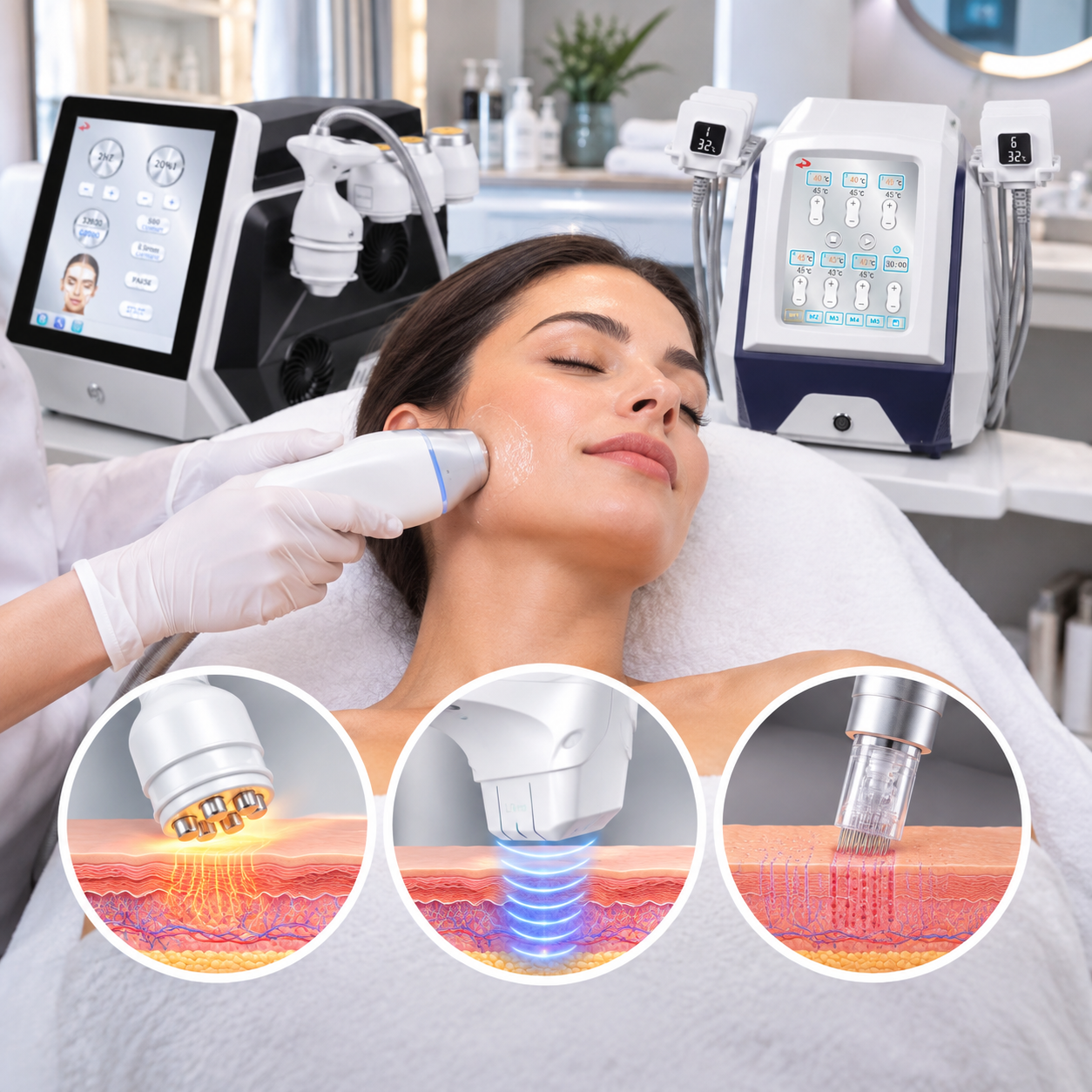
If you’re researching how to tighten skin after weight loss, you’ve probably already tried the basics: hydration, protein, strength training. Those help at the margins, but they rarely solve moderate to severe skin laxity after weight loss. This is where machine-based technologies come in. Radiofrequency (RF), HIFU (high-intensity focused ultrasound), and RF microneedling are the three non-surgical treatments backed by the most clinical evidence for tightening loose skin without going under the knife.
This guide breaks down how each technology works, which body areas respond best, what results you can realistically expect, and how to think about safety and equipment quality, whether you’re a patient considering treatment or a clinic evaluating which device to invest in.
Why Skin Becomes Loose After Weight Loss

Skin is a living organ, not a static wrapper. Its firmness comes from two structural proteins in the dermis: collagen, which gives skin its strength, and elastin, which lets it stretch and spring back. When you carry extra weight for months or years, these fibers stretch to accommodate a larger body. According to the Cleveland Clinic, radiofrequency devices work specifically because they stimulate the regeneration of collagen, elastin, and new skin cells, the same proteins that weight gain damages over time.
The problem is that collagen and elastin don’t regenerate as easily as they degrade. Once these fibers are overstretched for a long period, they lose much of their ability to retract, so when the weight comes off, the skin can’t shrink back down to match your new shape.
The GLP-1 Factor: Why Rapid Weight Loss Leaves More Skin Behind
GLP-1 medications have made fast, dramatic weight loss common, but speed is the enemy of skin retraction. The quicker fat cells shrink, the less time the dermis has to adapt gradually. This is why GLP-1 loose skin has become such a widely searched concern in the last two years. People are losing 15 to 20% of their body weight in months rather than years, and their skin structure simply hasn’t caught up.
Key Factors That Determine How Much Skin Laxity You’ll Have
Several factors influence how much loose skin you’re left with:
- Age. Older skin has less baseline collagen and rebounds more slowly.
- Genetics. Some people naturally have more elastic connective tissue.
- Duration of excess weight. The longer skin was stretched, the harder it is to retract.
- Amount and speed of weight lost. Rapid, large-volume loss, including GLP-1-driven loss, tends to leave more laxity.
- Sun exposure and smoking. Both accelerate collagen breakdown independent of weight changes.
Can Loose Skin Tighten on Its Own?

Sometimes, yes. If you lost a small to moderate amount of weight gradually and you’re relatively young, your skin may retract mostly on its own within several months to two years. But for larger weight loss, particularly anything approaching or exceeding 50 to 100 pounds, natural retraction is usually incomplete. This is the point where non-surgical, machine-based skin tightening becomes genuinely useful, sitting between “do nothing and wait” and surgical skin removal.
It helps to think of skin laxity after weight loss in three rough categories:
- Mild laxity. Some crepiness or softness, often responds well to non-invasive devices alone.
- Moderate laxity. Visible sagging with reduced elasticity, responds to RF, HIFU, or RF microneedling, sometimes combined.
- Severe laxity. Hanging folds or excess skin (common after major bariatric weight loss), which usually requires surgical removal, with devices used afterward for maintenance.
Machine-Based Skin Tightening: The Three Core Technologies

This is where most articles on this topic stay shallow. Understanding how each device actually works, not just its brand name, is what helps you make a genuinely informed decision.
Radiofrequency (RF) Skin Tightening
RF devices deliver low-frequency electromagnetic energy that generates heat as it passes through the skin’s layers. That heat prompts fibroblasts, the cells responsible for producing collagen, to increase output, while also causing existing collagen fibers to contract slightly. The Cleveland Clinic notes that this process can take two to six months to show visible results, since new collagen production isn’t instant.
RF works well as a starting point for mild to moderate skin laxity across large areas like the abdomen, arms, and thighs, and it’s generally the gentlest of the three technologies, with minimal to no downtime. Monopolar RF systems, such as the Jisu ID Monopolar RF Fat Dissolving Machine, are commonly used in clinics for body-wide skin tightening because their six-handle design allows multiple areas to be treated efficiently in a single session.
HIFU (High-Intensity Focused Ultrasound)
HIFU takes a different approach. Rather than heating the surface, it focuses ultrasound beams to converge at a precise depth beneath the skin, much like a magnifying glass focusing sunlight to a single point. At that focal point, temperatures rise sharply, creating controlled zones of thermal injury that trigger a wound-healing response. This recruits fibroblasts and drives new collagen and elastin production over the following months.
Facial HIFU devices typically target depths of 1.5mm to 4.5mm, reaching down to the SMAS layer, the same fibrous layer surgeons manipulate during a surgical facelift. Body-focused HIFU cartridges reach deeper, from 6mm to 13mm, allowing it to tighten skin while modestly reducing subcutaneous fat at the same time. Advanced multi-depth systems, like the Professional 12D HIFU ICE Face Lifting & Skin Tightening Machine, extend this range even further, delivering energy across nine depth settings from 1.5mm to 16mm, so a single device can address fine lines, deep collagen stimulation, and fat layer contouring in one treatment plan. This dual action is part of why HIFU for loose skin has become popular for post-weight-loss jawline, neck, and abdominal concerns.
For clinics wanting a broader treatment menu, combination platforms such as the 6-in-1 Liposonic 4D HIFU Facial with Radar Carving & RF Body Slimming pair HIFU with RF energy in the same system, letting practitioners tailor depth and modality to each client’s skin laxity grade without switching machines.
RF Microneedling
RF microneedling combines two mechanisms in one device: fine needles create controlled micro-injuries in the skin, while radiofrequency energy is delivered simultaneously through those needle tips into the mid-to-deep dermis. This dual injury, mechanical and thermal, produces a stronger wound-healing and collagen-remodeling response than either method alone.
Because it works in the superficial-to-mid dermis, RF microneedling is particularly effective for skin texture, stretch marks, and crepey skin left after weight loss, not just tightening. It has become one of the most searched Morpheus8 alternative options, since Morpheus8 is simply one branded version of this same underlying RF microneedling technology, rather than a fundamentally different treatment. Devices like the Portable Morpheus8-Style Fractional RF Microneedling Machine with Cold Ice Hammer use insulated needles to deliver RF energy to precise depths of roughly 0.5mm to 7mm, with an integrated cooling hammer to improve comfort during and after treatment.
Quick Comparison: RF vs. HIFU vs. RF Microneedling

| Technology | Depth Reached | Primary Mechanism | Best For | Typical Downtime |
|---|---|---|---|---|
| Radiofrequency (RF) | Mid-to-deep dermis | Volumetric heating, collagen contraction | Mild-to-moderate laxity, large body areas | None to minimal |
| HIFU | 1.5mm to 16mm (dermis to SMAS/fat) | Focused thermal injury, deep collagen stimulation | Jawline, neck, mild-moderate abdominal/arm laxity | None to minimal |
| RF Microneedling | Superficial-to-mid dermis | Micro-injury plus thermal energy combined | Texture, stretch marks, crepey skin | 1 to 3 days |
Which Treatment Suits Which Body Area?

Face, Neck, and Jawline
After facial fat loss, the jawline often softens and a double chin can linger. HIFU is generally the strongest option here because it reaches the SMAS layer directly, offering a lifting effect similar to a non-surgical facelift.
Abdomen and Flanks
For a mildly overhanging or crepey lower belly, common after bariatric surgery or GLP-1-driven weight loss, RF and HIFU both perform well over a three-to-four-month course. RF microneedling is often added when stretch marks or textural irregularity are also a concern.
Upper Arms and Inner Thighs
The loose, “bat wing” skin on the upper arms and mild sagging on the inner thighs respond to a combination approach: RF or HIFU for tightening, layered with RF microneedling if the skin surface also shows crepiness or stretch marks.
Realistic Timeline: What to Expect

Because these treatments work by stimulating your own collagen production rather than surgically removing tissue, results build gradually rather than appearing overnight.
- Days 1 to 3: Mild redness, warmth, or light swelling that resolves quickly.
- Weeks 1 to 4: Initial smoothing as inflammation settles.
- Weeks 8 to 12: Collagen remodeling accelerates; visible firmness begins.
- Months 3 to 6: Peak results become apparent, often most visible in side-by-side photos.
Most people need two to four sessions spaced four to eight weeks apart for body areas, though facial treatment for mild laxity sometimes needs only one session. Results generally last 12 to 18 months before gradual maintenance sessions are recommended, since the natural aging process continues in the background.
One important caveat: it’s best to wait until your weight has been stable for at least six months before starting any of these treatments. Treating skin that’s still shrinking risks targeting tissue that will later deflate further, which undermines the outcome.
Safety, Risks, and Who Should Avoid These Treatments
All three technologies are considered low-risk when performed with FDA-cleared or CE-marked devices by a trained provider. Common, temporary side effects include redness, mild swelling, and occasional tenderness that resolves within a few days.
These treatments are generally not recommended for:
- Pregnant individuals.
- People with active skin infections or open wounds in the treatment area.
- Those with a pacemaker or certain implanted devices (device-dependent; always check manufacturer contraindications).
- Anyone whose weight is still actively changing.
The Cleveland Clinic points out that rare burn risks are minimized when devices are FDA-approved and operated by an experienced provider, a reminder that equipment quality and calibration matter just as much as the underlying technology.
When Surgery Becomes the Only Real Option
It’s worth being honest about the limits of non-surgical treatment. RF, HIFU, and RF microneedling all work by contracting and rebuilding collagen; none of them can physically remove a large fold of excess skin. When there’s significant redundant tissue, such as a hanging abdominal apron after major bariatric weight loss, only excisional surgery (like a tummy tuck, panniculectomy, or arm lift) can correct it.
For many people, the most effective path is a combination approach: surgery to remove major excess skin, followed later by RF, HIFU, or RF microneedling to refine remaining laxity and improve skin quality in areas where a second surgical scar isn’t worthwhile.
Choosing the Right Equipment: What Clinics and Distributors Should Look For
For clinics, medical spas, and equipment distributors evaluating non-surgical skin tightening machines, the technology name on the box matters less than what’s underneath it. A few practical checkpoints:
- Verified energy specifications. Actual frequency (MHz), penetration depth per cartridge, and cooling mechanisms should be documented and testable, not just marketed.
- Regulatory clearance. CE marking and, where applicable, FDA clearance pathways for the specific device class.
- Manufacturing standards. ISO-certified production processes reduce the risk of inconsistent energy delivery, a common cause of poor clinical outcomes.
- OEM/ODM flexibility. For resellers and private-label buyers, confirm whether the manufacturer supports custom branding, packaging, and after-sales technical support.
When evaluating the best skin tightening device for clinics, ask the manufacturer directly about warranty terms, spare parts availability, and training support. These operational details affect long-term treatment consistency and patient outcomes far more than headline marketing claims.
FAQs About How To Tighten Skin After Weight Loss
It’s best to wait until your weight has been stable for at least six months, ideally closer to a year. Skin continues adjusting for months after weight loss, and treating too early can target tissue that later deflates further.
No. These treatments tighten and improve existing skin through collagen stimulation, but they cannot remove large folds of excess skin. Surgery remains the only option for significant skin redundancy.
Most people describe mild discomfort during treatment, often reduced with topical numbing. Downtime is typically one to three days of redness or minor swelling.
Standard radiofrequency treatments generally have the least downtime, often none at all, since they don’t involve needles or aggressive thermal injury at the surface.
Yes. Many providers layer treatments, for example, HIFU for deep lifting combined with RF microneedling for surface texture and stretch marks, since each works at a different skin depth.
Key Takeaways
- Loose skin after weight loss happens because collagen and elastin fibers lose their ability to retract, especially after rapid or GLP-1-driven weight loss.
- Radiofrequency, HIFU, and RF microneedling are the three leading non-surgical, machine-based options, each working at different skin depths.
- Results build gradually over three to six months and typically last 12 to 18 months with maintenance.
- Severe skin redundancy still requires surgical removal; devices work best for mild-to-moderate laxity or as post-surgical maintenance.
- For clinics and distributors, verified specifications, regulatory clearance, and manufacturing quality matter more than brand names when selecting equipment.
Wrapping It Up
Tightening skin after weight loss rarely comes down to a single fix. For mild laxity, patience and the natural rebuilding of collagen may be enough. Moderate laxity, radiofrequency, HIFU, and RF microneedling each offer a genuine, evidence-backed path to firmer skin, with the right choice depending on the treatment area, downtime tolerance, and how severe the sagging is. For significant excess skin, surgery remains the only realistic solution, often paired with these same devices afterward to refine the final result.
Whichever route you or your clinic chooses, the underlying technology only performs as well as the machine delivering it. Ojan Beauty is a manufacturer and global supplier of the RF, HIFU, and RF microneedling machines referenced throughout this guide, built for clinics, medical spas, resellers, distributors, and importers who need consistent energy output, verified certifications, and reliable after-sales support behind every device on their treatment menu.