

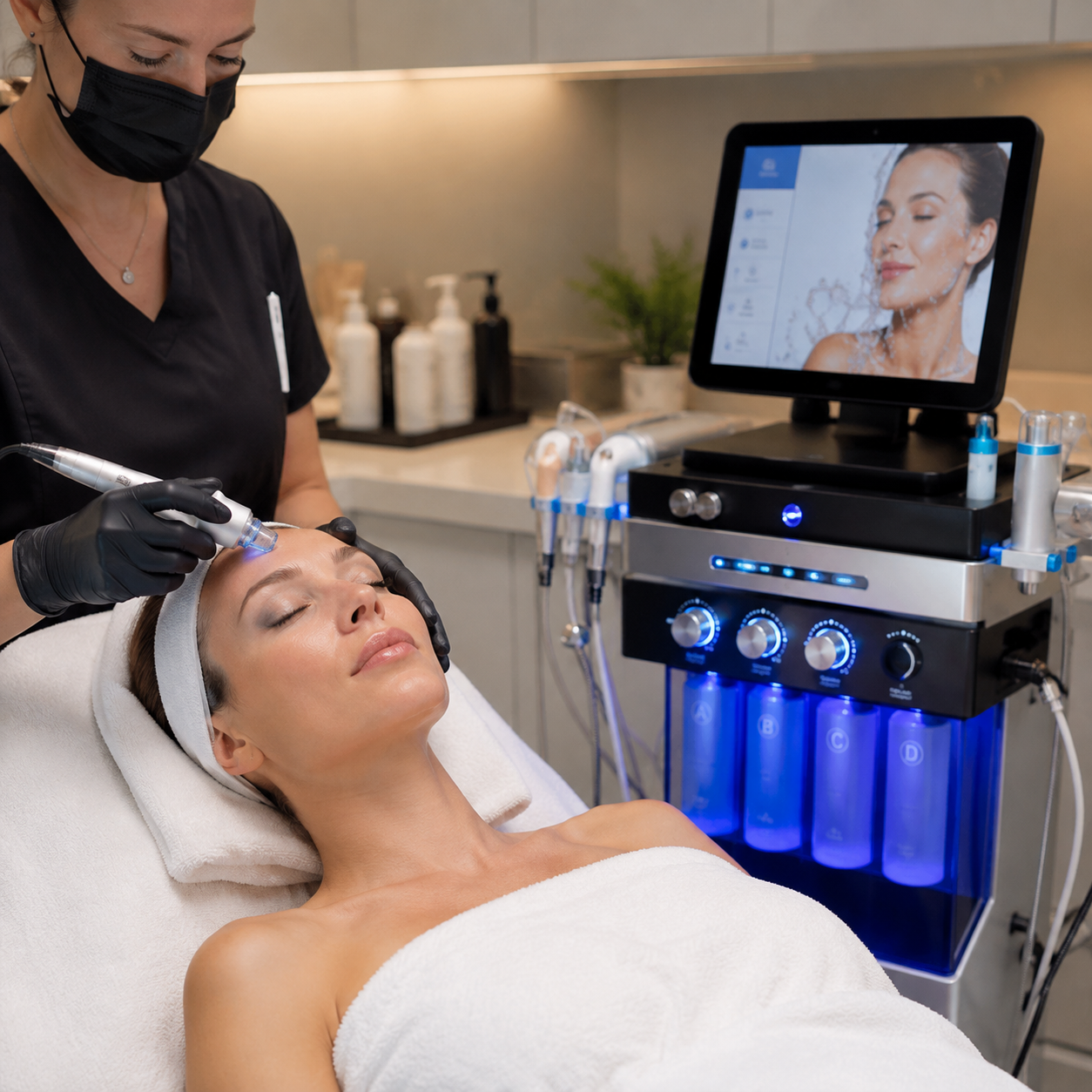
How Often Should You Get a HydraFacial? The Complete, Evidence-Based Schedule
Search “how often should you get a HydraFacial” and you’ll get five different answers from five different spas: every two weeks, once a month, every four to six weeks, every three weeks if your skin is oily. None of them agree, and almost none of them explain why.
At OJAN Beauty, we sit on the other side of this question. We don’t just talk about HydraFacial-style treatments, we manufacture and supply the hydra-dermabrasion machines that clinics, med spas, and estheticians around the world use to deliver them. Over the years we’ve worked with hundreds of salon owners and skincare professionals who ask us the same thing operators ask their clients: what’s the right interval between sessions, and what actually determines it?
The short answer: most people should book a HydraFacial every 4 to 6 weeks, with a shorter series of sessions every 2 to 3 weeks when starting out or correcting a specific concern. But that number isn’t arbitrary, it’s tied to how your skin naturally renews itself, and it shifts depending on your skin type, the equipment being used, and how your provider calibrates the treatment. Let’s walk through all of it.
Quick Answer: HydraFacial Frequency at a Glance

| Skin Goal | Recommended Frequency | Notes |
|---|---|---|
| First-time / corrective series | Every 2–3 weeks (3–6 sessions) | Builds cumulative improvement before spacing out |
| General maintenance (all skin types) | Every 4–6 weeks | Matches the skin’s natural renewal cycle |
| Oily or acne-prone skin | Every 3–4 weeks | Faster oil/debris buildup needs shorter gaps |
| Dry or dehydrated skin | Every 4–6 weeks | Gentler pace prevents barrier stress |
| Sensitive or rosacea-prone skin | Every 5–6 weeks | Longer gaps reduce irritation risk |
| Pre-event glow session | 3–5 days before the event | Timed for peak hydration, minimal redness |
Keep that table in mind as a starting point. The rest of this guide explains the reasoning behind each number, because understanding the why is what actually helps you (or your clients) stick to a routine that works.
PRODUCT LINK – Multifunctional Professional 14 In 1 Skin Scrubber & HydraFacial Machine For Sale
Why 4–6 Weeks? The Skin Science Behind the Recommendation

Almost every HydraFacial article online gives you a number without explaining where it comes from. It comes from your skin’s own biology.
The Skin Cell Renewal Cycle
Your skin is constantly rebuilding itself. New cells form in the deepest layer of the epidermis and slowly migrate to the surface, where they’re eventually shed. This process depends on your skin type and takes different amounts of time for different people. In general, skin naturally sheds dead cells from its outermost layer every 28 to 40 days, depending on age and overall skin health.
That renewal window is exactly why estheticians and dermatologists converge on a “4 to 6 week” rule for resurfacing treatments like HydraFacial. Book too soon, and you’re treating skin that hasn’t finished its natural cycle yet. Space sessions too far apart, and dead cells, oil, and debris re-accumulate long before your next appointment, so results don’t compound.
What Happens to Your Skin Between Sessions
Immediately after a HydraFacial, skin looks plumper and more radiant because the treatment flushes out debris and floods the surface with hydrating serums. That peak hydration effect is temporary, most people notice it fading within about five to seven days. But the deeper benefits, like clearer pores and more even texture, build gradually across multiple sessions spaced to the renewal cycle, not from any single visit.
Why Overdoing It Can Backfire
More frequent isn’t automatically better. Sensitive, dry, acne-prone, and mature skin often need a gentler, less frequent approach, and signs of over-exfoliation include burning, redness, tightness, flaking, and increased breakouts. HydraFacial is far gentler than a chemical peel or aggressive microdermabrasion, but it still involves suction-based exfoliation, and treating skin before it has recovered from the last session can leave the barrier compromised rather than improved.
HydraFacial Frequency by Skin Type and Concern

A single blanket answer (“once a month, always”) ignores how differently skin types behave. Here’s how frequency should actually shift.
Oily and Acne-Prone Skin
Oilier skin produces sebum faster, and pores clog more quickly. A shorter interval, roughly every 3 to 4 weeks, helps keep congestion under control. During an active breakout phase, some providers recommend starting every 2 to 3 weeks, then spacing out once skin stabilizes.
Dry or Dehydrated Skin
Dry skin doesn’t need aggressive exfoliation as often, but it does benefit consistently from the hydration-infusion step. A 4- to 6-week rhythm keeps moisture levels topped up without over-exfoliating an already-compromised barrier.
Aging Skin and Fine Lines
As skin matures, cell turnover slows, sometimes stretching well past the 28-day baseline seen in younger skin. That means results take a little longer to show, but it doesn’t mean more frequent treatment is better. A 4-week interval, often paired with anti-aging booster serums, tends to work best without overwhelming slower-renewing skin.
Hyperpigmentation and Uneven Tone
For dark spots or sun damage, a shorter initial series (every 2 to 3 weeks) can accelerate visible improvement, since consistent, gentle exfoliation helps fade surface pigmentation faster. Once tone evens out, monthly maintenance is usually enough to sustain it.
Sensitive or Rosacea-Prone Skin
This is where the “less is more” principle matters most. Sensitive and rosacea-prone skin generally does better on a 5- to 6-week schedule, with lower suction settings and calming serums, to avoid triggering redness or flare-ups.
First-Time Series Vs. Long-Term Maintenance

Starting Out: The Corrective Series
If it’s your first time getting a HydraFacial, or you’re targeting a specific issue like congestion or dullness, most experienced providers recommend a short series, typically three to six sessions spaced two to three weeks apart. This builds cumulative improvement faster than spacing sessions out from day one.
The Maintenance Phase
Once your skin reaches a stable, healthy baseline, monthly or every-5-to-6-week visits are usually enough to maintain results. This is the phase most long-term HydraFacial clients settle into.
Timing Around Big Events
If you’re prepping for a wedding, photoshoot, or big event, book your session three to five days beforehand, not the day before. This window allows the peak hydration and glow to show while any minor redness from extraction has fully settled.
What Actually Determines “How Often”, Beyond Skin Type

This is the part most consumer-facing HydraFacial articles skip entirely, and it’s where our perspective as an equipment supplier adds something genuinely different: the machine and the provider matter as much as your skin type.
The Equipment and Tip Technology
Not all hydra-dermabrasion devices are calibrated the same way. Suction intensity, serum-delivery pressure, and the condition of the exfoliation tip all affect how much stress a single session places on the skin. A well-maintained, properly calibrated professional-grade machine delivers consistent, gentle results session after session. A poorly maintained unit, with worn tips or inconsistent vacuum pressure, can either under-deliver results or, at the other extreme, over-exfoliate skin without the operator realizing it. This is one reason we always tell salon partners that equipment quality isn’t a cosmetic detail; it directly affects how safely you can schedule clients.
Provider Skill and Customization
A trained esthetician adjusts suction level, serum choice, and pressure to the client sitting in front of them. That customization is what allows some clients to comfortably tolerate a 3-week interval while others need the full 6 weeks to recover between sessions.
Lifestyle and Environmental Factors
Sun exposure, air pollution, climate, and active skincare ingredients like retinoids or exfoliating acids all influence how quickly skin needs its next session. Someone using a nightly retinol, for instance, may need to space HydraFacial visits slightly further apart to avoid compounding exfoliation.
Can You Get a HydraFacial Too Often?
Yes. Even though HydraFacial is marketed as a no-downtime treatment, that doesn’t mean unlimited frequency is safe. Booking sessions closer than every two weeks, without a specific clinical reason and provider guidance, risks leaving skin persistently sensitized. Watch for these signs that you’re overdoing it:
- Redness or warmth that lingers more than a day
- Increased tightness or flaking between sessions
- Breakouts that get worse rather than better
- Skin that feels reactive to products it previously tolerated
If any of these show up, it’s a signal to extend the gap between appointments, not push through.
HydraFacial vs. Other Resurfacing Treatments: How Frequency Compares

| Treatment | Typical Frequency | Downtime |
|---|---|---|
| HydraFacial | Every 4–6 weeks | None |
| Chemical peel (light-medium) | Every 4–8 weeks | 1–5 days |
| Microdermabrasion | Every 3–4 weeks | Minimal |
| Microneedling | Every 4–6 weeks | 1–3 days |
HydraFacial’s water-based, non-abrasive mechanism is precisely why it tolerates more frequent scheduling than peels or microneedling. There’s no controlled injury to the skin that requires recovery time, just gentle exfoliation and infusion.
For Estheticians and Salon Owners: Building the Right Treatment Cadence
If you’re running a med spa or skincare clinic, or supplying one, frequency isn’t just a client-facing question. It’s a business one.
Structuring Packages Around the Renewal Cycle
The 4-to-6-week natural cycle is exactly why package models built around 4, 6, or 12 sessions tend to perform well for client retention. Booking cadence that mirrors biology, rather than an arbitrary calendar reminder, keeps clients engaged because they’re actually seeing progressive results.
Matching Equipment to Client Volume
For clinics scaling up recurring HydraFacial-style services, device throughput matters. How many clients can realistically be booked per week depends on tip replacement cost, serum consumption per session, and how quickly the machine can be reset between appointments. This is a conversation we have constantly with distributors and salon buyers sourcing equipment through our hydra-dermabrasion machines, the right device tier depends on projected session volume, not just upfront cost.
Setting Realistic Client Expectations
Clients who understand why results build over four to six weeks are far less likely to churn after one underwhelming visit. Training front-desk and treatment staff to explain the renewal-cycle logic, not just “come back in a month”, measurably improves rebooking rates.
FAQs About HydraFacial
For your first HydraFacial or when correcting a specific concern like congestion or dullness, most providers recommend a short series of 3 to 6 sessions spaced 2 to 3 weeks apart before switching to monthly maintenance.
The peak glow and hydration typically last about 5 to 7 days, while deeper improvements in texture and clarity build gradually across a series of properly spaced sessions.
Yes. As skin cell turnover slows with age, more mature skin often responds well to a consistent 4-week interval rather than shorter gaps, since overly frequent exfoliation can stress an already slower-renewing barrier.
Yes. Once skin reaches a stable, healthy baseline after an initial series, monthly or every-5-to-6-week sessions are generally the ideal long-term maintenance schedule for most skin types.
The Bottom Line
There’s no single universal answer to “how often should you get a HydraFacial,” but there is a reliable framework: start with a short series every 2 to 3 weeks if you’re new or correcting a concern, then settle into a 4-to-6-week maintenance rhythm once your skin stabilizes, adjusting slightly based on your skin type, sensitivity, and how your provider calibrates the treatment. The number itself matters less than understanding that it’s rooted in your skin’s actual renewal cycle, not a marketing schedule.
For clinics and resellers building a HydraFacial-style service line, the same principle applies at the business level: cadence, equipment quality, and client education all work together to make the treatment genuinely effective, not just frequently booked.