

How Long Do Diode Laser Hair Removal Results Last Before Regrowth?
Diode laser hair removal doesn’t have an expiration date so much as a fade rate, and that fade rate comes down to something most people never think about: which of their hair follicles happened to be actively growing on the day they were treated. A laser only permanently damages a follicle while it’s in its active growth phase, so the results from any single session are really just the sum of whichever follicles got caught mid-cycle. That’s why “how long does it last” doesn’t have one clean answer. It has a range, and that range depends on the area treated, the person’s hormones, and how thorough the original course of sessions actually was.
That range, roughly three to six months for a temperamental area like the face and well over a year for legs and arms, is what actually decides whether someone needs a yearly touch-up or none at all. Here’s what the research says about how long diode results really hold, why regrowth tends to come back finer instead of not at all, and the maintenance schedule that keeps results looking permanent even when, technically, they aren’t.
Why “Permanent” Isn’t Quite the Right Word
The FDA only ever approved the term “permanent hair reduction” for laser treatment, never “permanent removal,” and that distinction matters more than it sounds. The laser works through selective photothermolysis: a specific wavelength of light passes through the skin, gets absorbed by melanin in the hair, and converts to heat that damages the dermal papilla and bulb, the structures beneath the skin that actually grow the hair. Destroy enough of that structure and the follicle stops producing hair for good. Damage it only partially, and it keeps producing hair, just slower, finer, and lighter than before.
Because that damage happens follicle by follicle rather than all at once, complete permanence was never really on the table. What diode lasers deliver instead is a genuine, lasting reduction in how much hair grows back, which is a different promise than the one marketing sometimes implies.
The Hair Cycle Problem Behind Every Touch-Up
Hair grows in cycles: an active growth phase called anagen, a short transition called catagen, and a resting phase called telogen before the follicle sheds and starts over. A laser can only meaningfully damage a follicle during anagen, when it’s flush with the pigment the laser needs to target. At any given time, only a portion of the hair on a treated area is actually in that phase, which is the entire reason one session is never enough and why a full course is typically spaced four to eight weeks apart, timed to catch more follicles as they cycle into anagen.
One diode-specific study on underarm hair found something worth knowing before assuming progress is linear: hair clearance measured at three months after treatment was actually lower than clearance measured at one month, before climbing back up again by six months in the subjects tracked that long. Researchers attributed this to “treatment-induced synchronization,” meaning the laser nudges surviving follicles into growing in sync rather than on their usual staggered schedule, which can make results look like they’re backsliding before they settle into their true long-term level. The study was small, ten subjects, with only three followed out to six months, so it’s a useful caution against judging results too early rather than a firm number to plan around.
How Long Results Actually Hold, by Area
Most people see 80 to 95 percent hair reduction after a full course of six to eight sessions, but how long that reduction holds depends heavily on where it was done. Areas with less hormonal influence, legs, arms, and the back, tend to hold their results for 12 to 18 months or longer between any kind of touch-up. Areas that are more hormonally reactive, the face in particular, often need a touch-up every three to six months to stay looking clear, since facial hair responds more directly to hormonal shifts than body hair does.
This is also where skin and hair color come back into the picture. Results hold longest when there’s strong contrast between hair and skin color, since that’s what let the laser do a thorough job of destroying follicles in the first place. Fine, light, grey, or red hair was never absorbing much of the laser’s energy to begin with, so it was never going to hold a reduction as well as coarse, dark hair does, regardless of how good the machine is.
Why Regrowth Comes Back Finer, Not Full-Strength
When hair does return, it’s rarely back to its original thickness, and that’s a direct result of how the damage happened rather than a lucky coincidence. A follicle that received a partial dose of thermal energy, either because it was only briefly in anagen or because the beam only caught it at an angle, survives but with a smaller, weaker hair-producing structure. The visible result is hair that’s thinner, lighter, and slower-growing, and each additional session that follicle sits through generally pushes it further in that direction.
What Actually Shortens the Timeline
The single biggest wildcard is hormones. Conditions like polycystic ovary syndrome, along with pregnancy, menopause, and some medications, can reactivate follicles that laser treatment had shut down, which is why hormonally driven regrowth shows up disproportionately on the face, chin, and jawline rather than the legs. This isn’t a failure of the laser or the provider; it’s a biological process the laser was never equipped to control in the first place.
It’s also worth reading long-term satisfaction studies with a bit of skepticism about their methodology. A lot of the durability data on diode laser hair removal comes from self-reported outcomes and relatively short follow-up windows, often twelve months or less, rather than the five-year prospective studies that would settle the question more definitively. That doesn’t mean the treatment doesn’t work; it means the honest answer to “will this last a decade” is that the research mostly hasn’t tracked people that long, and individual results vary more than a single quoted percentage suggests.
Ojan Beauty’s Diode Systems for Consistent Results
How durable a result holds up also comes down to whether the machine could actually reach and damage the target follicle in the first place, which is where wavelength coverage and consistent output start to matter.
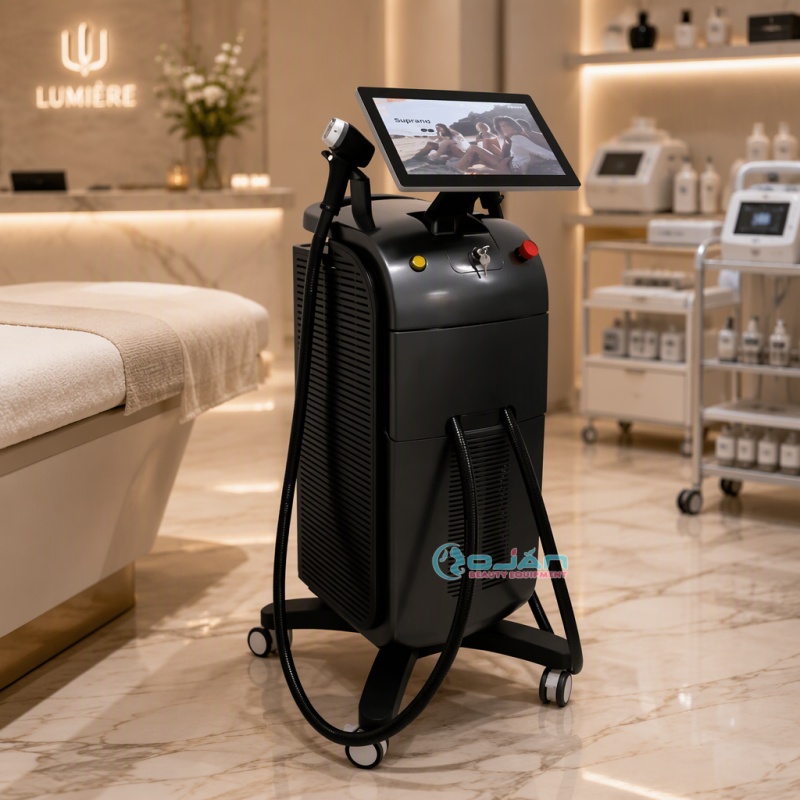
High-Quality Diode Laser 755/808/1064 Epilation Machine runs on gold-standard 808nm diode technology at a rapid 10 pulses per second, with 755nm and 1064nm built into the same system so a provider can match the wavelength to the client’s actual hair and skin tone rather than running everyone through a single setting. Its Sapphire Dual-Chill contact cooling tip protects the skin’s surface while energy reaches the follicle, which matters because a session cut short by discomfort is a session that leaves more follicles undertreated and more regrowth waiting in the wings.

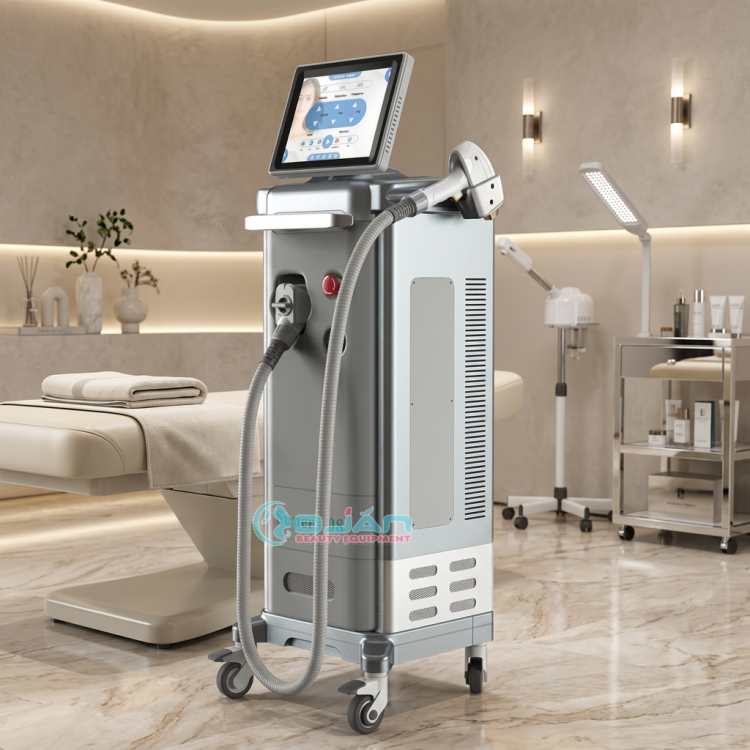
Super 808 755/808/1064nm Diode Laser Hair Removal Machine carries the same three wavelengths and pairs high power output with a short pulse width, which Ojan Beauty positions as a way to deliver a more complete dose of energy per pulse without sacrificing comfort. A more thorough dose per session is directly tied to how many follicles get fully rather than partially damaged, which is the variable that decides whether someone’s results hold for eighteen months or fade back after six.
Getting the Most Durable Results From the Start
The sessions someone skips matter more than almost anything else. Spacing sessions too far apart, or stopping the course early once hair looks thin, leaves untreated follicles that were simply in the wrong phase at the time, and those follicles don’t disappear on their own. Finishing the full recommended course, typically six to eight sessions, gives the laser more chances to catch follicles as they cycle through anagen rather than leaving that work half done.
Sun exposure during the course also undermines durability indirectly: tanned skin forces providers to lower the energy setting for safety, which means a less thorough dose reaches the follicle. Beyond that, the honest maintenance plan is simple. Book a touch-up when regrowth becomes visible rather than on a fixed calendar, since the interval genuinely differs by area and by person, and treat a touch-up as normal rather than a sign the original treatment failed.
The Bottom Line
Diode laser hair removal results last anywhere from several months to well over a year, and the biggest factors in that range, hair cycle timing, hormones, and how completely the original course was finished, have more influence than the specific machine used. What comes back is usually finer and lighter rather than a full return to where someone started, and that reduction can be maintained indefinitely with occasional touch-ups rather than starting over from scratch. Set expectations around genuine long-term reduction instead of permanence, finish the full course, and the results hold up far better than a single quoted percentage or timeline ever suggests.