

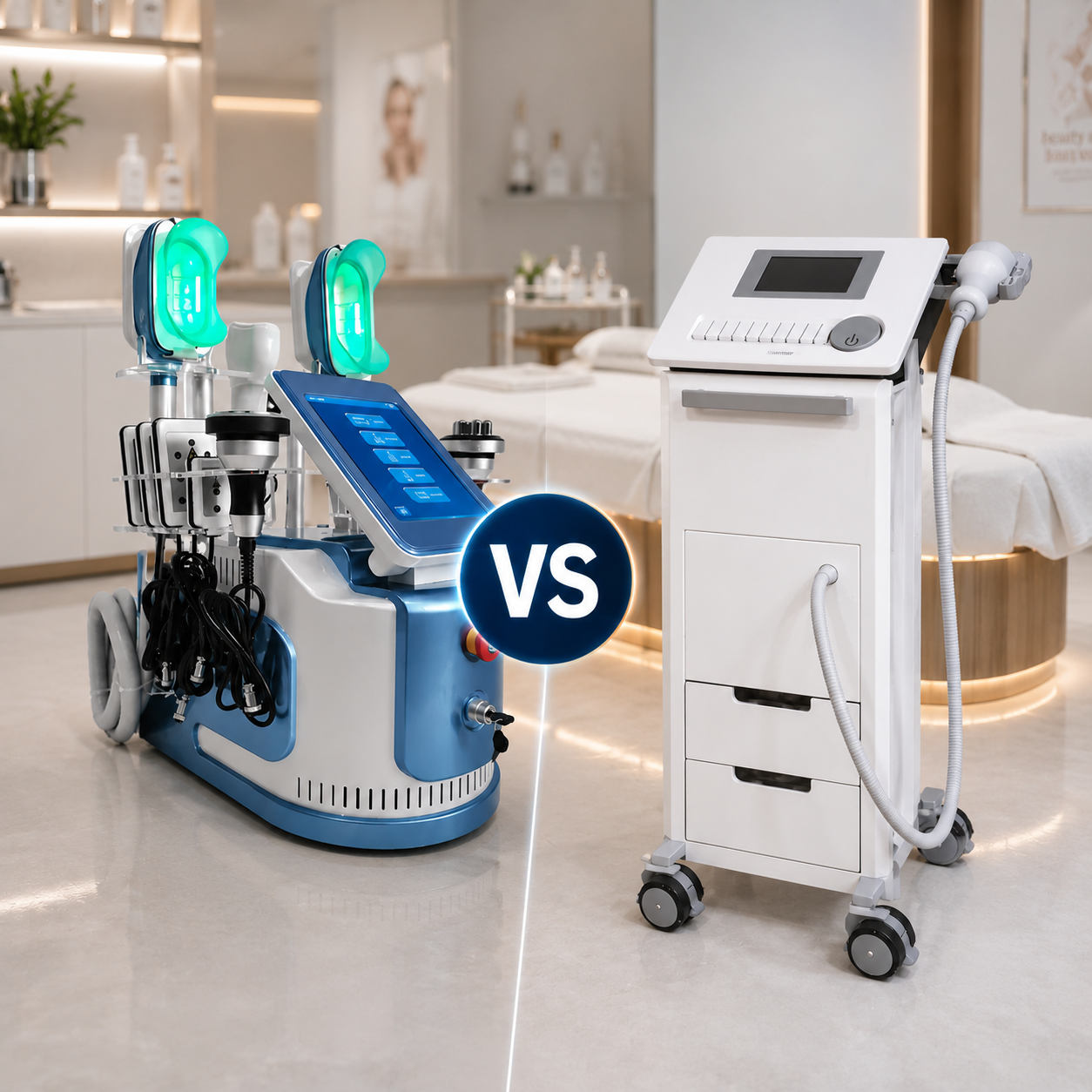
CoolSculpting Vs Cryo T-Shock: Which Treatment Is Actually Right For You?
CoolSculpting uses vacuum suction and constant sub-zero cold to freeze fat cells (cryolipolysis). Cryo T-Shock uses a handheld wand that cycles heat and cold across the skin, without suction. CoolSculpting has FDA clearance and more long-term safety data. Cryo T-Shock is generally more comfortable, treats more body shapes, and adds mild skin tightening, but has less independent clinical research behind it. Neither treatment is a weight-loss solution. Both remove localized fat cells permanently, once they’re gone.
We manufacture both cryolipolysis and thermal-shock body contouring machines at OJAN Beauty, and we’ve spent years talking to clinic owners, distributors, and aestheticians who use both technologies daily. This guide is built from that hands-on equipment experience, combined with peer-reviewed research, so you get a straight answer instead of a sales pitch.
What Is CoolSculpting? (Cryolipolysis Explained)

CoolSculpting is a brand name, not a generic category. It’s built on cryolipolysis, a process where controlled cold temperature damages fat cells while leaving skin and muscle unharmed. A vacuum applicator pulls a fold of fat between two cooling panels, holds it there for 35 to 60 minutes, and the fat cells crystallize and die. Over the next several weeks, the body clears out the dead cells through the lymphatic system.
CoolSculpting’s underlying technology first received FDA clearance in 2010 for the flank, followed by clearance for the abdomen in 2012, and it has since been cleared for the thighs, chin, upper arms, and other areas. The CoolSculpting system has now gained regulatory clearance in more than 70 countries. This matters for buyers: CoolSculpting is currently the only cryolipolysis device with full U.S. FDA clearance. Most other cryolipolysis machines on the market, including many manufactured in Asia and Europe, operate under CE or ISO certification instead, which are valid but different regulatory pathways.
PRODUCT LINK – Portable 360 Cryolipolysis Machine Cryo Fat Freezing Machine
What Is Cryo T-Shock? (Thermal Shock Explained)

Cryo T-Shock doesn’t use suction at all. A trained technician moves a handheld wand across the skin in three phases: a short warm-up that increases blood flow to the fat layer, a longer cold phase that crystallizes fat cells, and a final warm phase that supports lymphatic drainage and stimulates collagen in the skin.
Because there’s no vacuum, the applicator can glide over almost any body shape, small pockets like a double chin, curved areas like the inner thigh, or flat zones that CoolSculpting’s rigid cups can’t grip. This is the single biggest practical difference clinic owners tell us matters: fewer “we can’t treat that spot” conversations with clients.
Key Technical Differences Between The Machines
| Feature | CoolSculpting | Cryo T-Shock |
|---|---|---|
| Applicator type | Vacuum suction cup | Handheld manual wand |
| Temperature approach | Constant sub-zero freeze | Alternating heat and cold cycles |
| Session length | 35 to 60 minutes | 30 to 60 minutes |
| Sessions typically needed | 1 to 3 per area | 5 to 10, spaced 1 to 2 weeks apart |
| Skin tightening | Not a primary function | Built into the treatment cycle |
| Regulatory status | FDA-cleared (U.S.) | Varies by manufacturer, CE/ISO common |
| Bruising risk | Possible, from suction | Low, no suction involved |
Safety Profile: What the Research Actually Shows
This is the part most comparison articles skip, and it’s the part that actually matters most.
CoolSculpting and Paradoxical Adipose Hyperplasia (PAH)
CoolSculpting’s manufacturer originally quoted a PAH rate (a rare side effect where treated fat grows larger instead of shrinking) of about 0.025%, or 1 in 4,000 treatment cycles. But independent research tells a different story. A multicenter study of 8,658 treatment cycles published in the Aesthetic Surgery Journal found actual incidence rates between 0.05% and 0.39%, noticeably higher than the manufacturer’s original estimate. A separate clinical review published on NCBI’s StatPearls platform notes some estimates suggest PAH may occur in up to 2% of treatments, or roughly 1 in 50 cases, and points out that model Linda Evangelista’s public account of PAH brought wider attention to the condition. PAH isn’t dangerous, but it’s firm, visible, and typically requires liposuction to correct. It’s worth an honest conversation with your provider, not a footnote. Oxford Academic + 2
Cryo T-Shock Safety Considerations
Cryo T-Shock has a much shorter track record of independent, peer-reviewed research compared to cryolipolysis. That’s not necessarily a red flag. The treatment doesn’t damage skin or cause the suction-related bruising associated with CoolSculpting, but because thermal-shock machines aren’t standardized under one FDA-cleared brand, safety depends heavily on the individual manufacturer’s temperature calibration and the operator’s training. If you’re a patient, ask your provider which brand of machine they use and whether it carries CE, ISO 13485, or equivalent certification. If you’re a clinic or distributor evaluating equipment, this is exactly where machine quality separates a safe investment from a liability. Inconsistent cooling-plate temperatures are the most common cause of skin injury complaints we hear about from clinics that bought uncertified units.
Results, Recovery, And Timeline

Both treatments are permanent in the sense that destroyed fat cells don’t come back, but remaining fat cells can still expand if you gain weight, so neither is a substitute for a stable lifestyle.
CoolSculpting typically shows visible results in one to three months, since the body needs time to clear frozen fat cells. Because it usually takes only one to three sessions per area, it suits people who want a “set it and forget it” plan with minimal appointments.
Cryo T-Shock tends to show early changes faster, often within one to three weeks, because the repeated warm-cold cycling also has an immediate, if temporary, tightening effect on skin. Full fat-reduction results still take a few months to develop, and most providers recommend a series of sessions rather than a single visit.
Does Either Treatment Tighten Skin or Reduce Cellulite?
CoolSculpting was designed to destroy fat cells, full stop. It isn’t built to improve skin elasticity, and providers are usually upfront that loose skin after treatment is a separate concern. Cryo T-Shock’s alternating heat-cold cycle is marketed for mild skin tightening and cellulite smoothing because heat can stimulate collagen production and boost circulation. It’s worth being honest here: the clinical evidence behind thermal-shock skin tightening is still thinner than the evidence behind cryolipolysis fat reduction, so treat it as a genuine secondary benefit, not a guaranteed transformation.
Cost Comparison: Per Session vs. Machine Investment
What Patients Typically Pay
A single CoolSculpting session usually runs from a few hundred to over a thousand dollars per area, depending on the clinic and applicator size, and most people need one to three sessions per zone. Cryo T-Shock is usually priced lower per session, but because a full plan often means five to ten visits, the total investment can land in a similar range by the end of a course of treatment.
What Clinics and Distributors Pay for Equipment
This is where the comparison shifts from patient decision to business decision. FDA-cleared cryolipolysis systems carry a significant upfront cost, plus recurring costs for proprietary applicator cups and gel pads that must be replaced regularly. Cryo T-Shock machines generally have a lower equipment cost and simpler consumables, mainly conductive gel and applicator heads, which makes them a common entry point for new medspas and independent aestheticians building out a body-contouring menu. For distributors and importers, the deciding factors should always be the same: verified certification, documented temperature accuracy, warranty terms, and manufacturer training support, not just sticker price.
How To Choose the Right Option
If You’re a Patient
Ask yourself four questions. How close are you to your goal weight? Do you have a “pinchable” bulge, or a flatter, harder-to-grab area? Are you also concerned about loose skin or cellulite, not just fat volume? And how much time can you commit, one appointment, or a multi-week series? If you have a solid pinchable bulge and want minimal visits, CoolSculpting fits. If you want to treat a tricky spot, prefer a gentler feel, or want a skin-tightening bonus, Cryo T-Shock fits.
If You’re a Clinic Owner, Distributor, or Importer
Look past the marketing name and check three things on any machine you’re sourcing: the certification paperwork (CE, ISO 13485, or FDA if selling into the U.S.), the temperature consistency specs from independent testing, and the manufacturer’s after-sales training and warranty. A cheaper machine with no calibration documentation isn’t a bargain, it’s a liability the first time a client has a skin reaction.
FAQs About CoolSculpting Vs Cryo T-Shock
No. CoolSculpting uses vacuum suction and constant freezing cold. Cryo T-Shock uses a handheld wand and alternates between heat and cold, with no suction involved.
Both are considered low-risk, non-invasive treatments. CoolSculpting has more long-term, FDA-backed clinical data, including documented but rare PAH cases. Cryo T-Shock avoids suction-related bruising but has less independent research overall, so provider skill and machine certification matter more.
CoolSculpting typically needs one to three sessions per area. Cryo T-Shock usually involves five to ten sessions, spaced one to two weeks apart, for full results.
PAH has been studied and documented specifically in cryolipolysis (CoolSculpting-type) treatments, with incidence estimates ranging from roughly 0.05% to 2%. Because Cryo T-Shock doesn’t use suction, PAH has not been documented as a known risk with this treatment method.
Yes. Some providers use CoolSculpting to reduce fat volume first, then follow up with Cryo T-Shock sessions to help tighten skin and smooth texture in the same area.
Key Takeaways
- CoolSculpting freezes fat with vacuum suction; Cryo T-Shock cycles heat and cold with a manual wand.
- CoolSculpting has FDA clearance and more long-term safety research; documented PAH rates range from about 0.05% to 2% across studies.
- Cryo T-Shock treats more body shapes and adds mild skin tightening, but relies more heavily on manufacturer quality and technician training.
- CoolSculpting usually needs fewer sessions; Cryo T-Shock needs more sessions but shows early changes sooner.
- Neither treatment is a weight-loss method. Both permanently remove fat cells, but remaining cells can still grow if you gain weight.
- If you’re sourcing equipment, certification and calibration documentation matter more than the technology name.
Final Thoughts
There’s no universal winner between CoolSculpting and Cryo T-Shock. CoolSculpting is the more clinically documented option, backed by FDA clearance and over a decade of published research, which makes it a dependable choice for a well-defined, pinchable fat pocket. Cryo T-Shock earns its growing popularity through comfort, flexibility across body shapes, and the added benefit of mild skin tightening, but it puts more weight on the quality of the machine and the skill of the person operating it.
The right choice ultimately depends on what you’re optimizing for. Patients should weigh comfort, treatment area, and how many sessions they’re willing to commit to. Clinics, distributors, and importers should weigh something else entirely: certification, calibration accuracy, and after-sales support, since those factors decide whether a machine builds a clinic’s reputation or damages it. Whichever side of that decision you’re on, the technology name matters far less than the evidence and the equipment standards behind it.
