

Cavitation Treatment Guide: What It Is, How It Works & Who It’s For (2026)
If you’ve searched “cavitation treatment,” you’ve probably found two kinds of pages: quick clinic ads promising instant fat loss, or long medical articles that never explain how the machine actually works. This guide sits in between. It’s written with input from Ojan Beauty’s equipment engineers, who build cavitation machines for clinics in over 40 countries, so you get both the clinical facts and the hardware reality behind them.
Key takeaways:
- Cavitation treatment uses low-frequency ultrasound to break down fat cells under the skin, not to make you lose weight.
- Most people need 6 to 10 sessions, spaced days apart, to see visible circumference loss.
- It’s FDA-cleared for body contouring and considered low-risk, but it isn’t for everyone.
- Results depend heavily on the machine’s frequency, power, and calibration, not just the provider’s skill.
- It works best on people close to their goal weight with small, pinchable fat pockets.
What Is Cavitation Treatment?

Cavitation treatment, also called ultrasonic cavitation or fat cavitation, is a non-surgical body contouring procedure. A handheld device sends low-frequency ultrasound waves into the fat layer just under your skin. Those waves create tiny bubbles inside the fat tissue. The bubbles expand and collapse rapidly, and that collapse breaks the walls of nearby fat cells apart. Your body then clears the released fat content through your lymphatic system, mostly over the days following treatment.
It’s important to say this clearly, because a lot of marketing blurs it: cavitation is not a weight loss treatment. It’s a shape and contour treatment. You won’t see the number on the scale drop much, but you may see a smaller waist, thigh, or arm measurement after a full course of sessions.
The Science Behind the Bubbles
The word “cavitation” comes from physics, not beauty. It describes what happens when sound waves pass through a liquid and cause pressure changes strong enough to form and burst microscopic vapor bubbles. This same phenomenon is studied in engineering fields like ship propeller design and industrial cleaning, long before it was applied to aesthetics.
In fat tissue, the fluid between cells reacts to these pressure waves. Bubbles form, grow, and then implode. That implosion releases a small burst of mechanical energy that’s enough to rupture the thin membrane of a fat cell, but gentle enough to leave skin, nerves, and blood vessels largely undisturbed. The fat cell’s contents, mainly glycerol and free fatty acids, spill into the surrounding tissue. Glycerol gets reused by your body for energy. The fatty acids travel through your lymphatic system to your liver, where they’re processed and eliminated, similar to how your body handles fat from food.
Ultrasonic Cavitation vs. RF Cavitation vs. Vacuum Cavitation vs. 40kHz Cavitation
This is where most consumer articles stop, but if you’re comparing treatments or machines, the differences matter.
- Ultrasonic cavitation typically runs at 1 to 3 megahertz (MHz). This is the classic fat-cavitation frequency and the one most clinical studies reference.
- 40kHz cavitation uses a much lower frequency and is often paired with vacuum suction. It’s common in combo machines because the lower frequency covers a broader area faster, though penetration depth differs from higher-MHz heads.
- RF (radiofrequency) cavitation combines an ultrasonic cavitation head with radiofrequency energy. The RF component heats the dermis, which can support skin tightening alongside fat disruption.
- Vacuum cavitation adds gentle suction to draw the fatty tissue closer to the ultrasound head, which some providers use to improve contact and lymphatic stimulation.
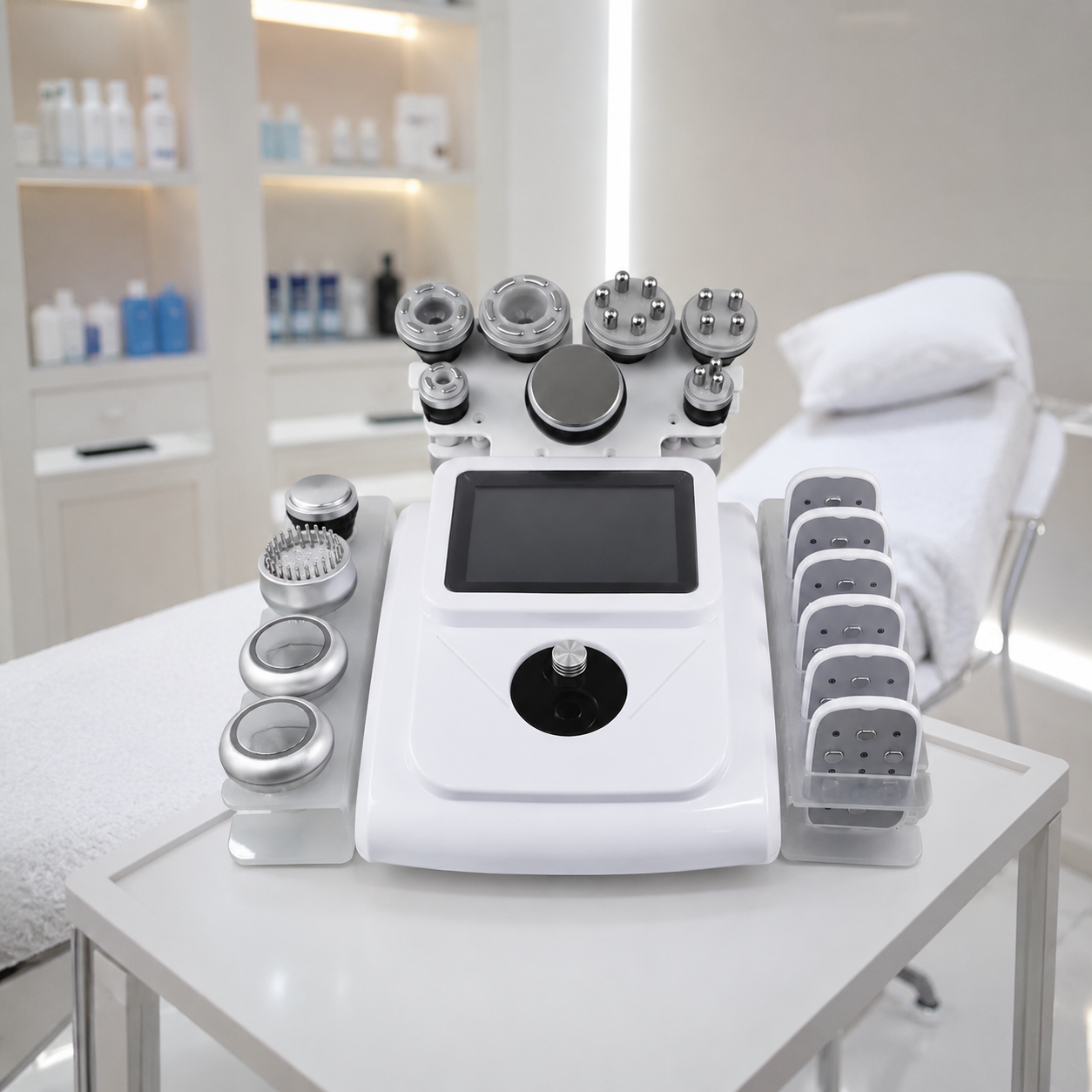
Multi-handle machines that combine two or three of these technologies are now standard in professional clinics, because a single handpiece rarely serves every body area or client goal.
Other Names You’ll See for Cavitation
You may also see cavitation called ultrasonic lipolysis, lipocavitation, or body cavitation. These terms describe the same core process; the differences are mostly in branding and regional naming conventions.
Product Link – 11 In 1 80K Cavitation & Vacuum RF Machine | Lipolaser, EMS Sculpting, Fat Removal & Anti-Wrinkle Skin Tightening Device
How Does Cavitation Treatment Work? A Step-by-Step Walkthrough

Before the Session
A qualified provider will start with a consultation. They’ll ask about your health history, check for contraindications, and assess whether your fat pockets are suitable for treatment. Some clinics take body measurements or photos to track progress across sessions.
During the Session
The treatment area is cleaned, and a conductive gel is applied so the ultrasound head glides smoothly and transmits energy efficiently. The provider moves the handpiece in slow, circular or sweeping motions over the target zone. Most people feel warmth and hear a soft buzzing or humming sound; it’s rarely described as painful. A session usually lasts 30 to 60 minutes, depending on the size of the area.
After the Session
There’s no downtime. You can drive yourself home and return to normal activities immediately. Providers typically recommend drinking extra water for the following 24 to 48 hours to support your lymphatic system as it clears the released fat, along with light activity like walking. Alcohol is often discouraged for a day or two, since it competes with your liver’s ability to process the released fatty acids.
What Body Areas Can Be Treated With Cavitation?

Cavitation works best on areas with soft, pinchable fat, meaning at least a couple of centimeters of skinfold thickness. Commonly treated zones include:
- Abdomen and love handles
- Flanks and lower back (“bra bulge”)
- Thighs and inner knees
- Upper arms
- Chin and jawline (with smaller handpieces)
It is not suitable for bony or thin-skinned areas like the neck’s front, the chest bone, or joints, since there isn’t enough fat tissue to safely absorb the ultrasound energy.
Is Cavitation Treatment Effective? What the Research Actually Shows
This is the section most competing articles skip or handle vaguely. Here’s what peer-reviewed research has found.
A controlled study published in PubMed followed women receiving combined ultrasound and radiofrequency body contouring alongside a low-calorie diet. After five weeks, the treatment group showed a measurable reduction in body fat mass compared with the diet-only group, even though total body weight didn’t differ much between groups (PubMed, 2019). That detail matters: it supports the idea that cavitation changes body composition and shape rather than causing weight loss on its own.
An earlier study of 30 participants who received a full course of ultrasonic cavitation sessions found a consistent reduction in the treated fat area, with average circumference loss of one to three centimeters by the end of the study (PubMed, 2007). Other clinical reviews suggest the treatment may be especially effective in fibrous areas of the body, such as the back and chest, where fat is more tightly bound to connective tissue (NCBI PMC).
Realistic Results Timeline
Most people need between one and three sessions to notice initial changes, but a full treatment plan for visible, lasting results is usually six to ten sessions, spaced three days to two weeks apart. Final results generally appear six to twelve weeks after starting treatment, since your body needs time to metabolize and clear the released fat.
Are Results Permanent?
Once a fat cell is ruptured through cavitation, it does not regenerate. That part of the fat loss is permanent. However, your remaining fat cells can still expand if you gain weight afterward, which is why maintaining a stable diet and activity level matters for keeping results long-term.
Who Is a Good Candidate for Cavitation Treatment?

Ideal Candidates
Cavitation tends to work best for people who:
- Have a body mass index roughly between 18.5 and 24.9 kg/m²
- Are already close to their goal weight
- Have specific, stubborn, pinchable fat pockets rather than large amounts of excess weight
- Have realistic expectations about gradual, moderate contouring rather than dramatic transformation
Who Should Avoid Cavitation Treatment
| Condition | Why It’s a Concern |
|---|---|
| Pregnancy or breastfeeding | Effects on fetal or infant health haven’t been studied |
| Pacemaker or metal implants | Ultrasound energy can interfere with devices |
| Blood clotting disorders or anticoagulant medication | Increased bruising or bleeding risk |
| Active skin infection or inflammation in the area | Risk of spreading infection or worsening irritation |
| History of certain cancers | Requires physician clearance before any energy-based treatment |
| Uncontrolled diabetes or osteoporosis | Underlying condition may affect healing or safety |
| Skinfold under 2 cm | Not enough fat tissue for safe, effective treatment |
Always disclose your full medical history to your provider before treatment, and get medical clearance if you have any of the conditions above.
Safety, Side Effects & Risks
Common, Short-Term Side Effects
Most people experience mild, temporary effects, including:
- Warmth or mild tingling during the session
- Slight redness or bruising
- Temporary tenderness in the treated area
- Increased thirst as your body processes released fat
- Occasional mild headache
These typically resolve within a day or two.
Rare Risks
Less commonly, people report uneven results, skin texture irregularities, or, in poorly calibrated equipment, minor burns or skin sensitivity. This is one area where the machine itself matters as much as the provider’s technique. Ultrasound intensity that’s too high, or a device without proper temperature and power regulation, increases the risk of skin injury. This is why clinics should only use equipment with documented safety certifications and calibrated power settings, not unregulated devices sourced without quality testing.
Cavitation Treatment Cost: What Affects the Price?
Cavitation is generally far less expensive than surgical liposuction, since it requires no anesthesia, incisions, or recovery time. Per-session pricing varies widely by country and clinic, but most people pay for a full course rather than a single visit, since one session alone rarely produces visible results.
What drives the price:
- Machine type — combo machines (cavitation plus RF or vacuum) often cost more per session than single-function devices
- Provider experience and clinic location — pricing in major cities tends to run higher
- Number of sessions needed — larger areas or more stubborn fat require more visits
- Package deals — many clinics discount multi-session bundles, since results build cumulatively
Cavitation vs. Other Fat-Reduction Treatments

| Treatment | How It Works | Invasiveness | Downtime | Typical Sessions |
|---|---|---|---|---|
| Cavitation | Ultrasound ruptures fat cells | Non-invasive | None | 6–10 |
| Liposuction | Surgical fat removal via cannula | Surgical | 1–2 weeks | 1 |
| Cryolipolysis (fat freezing) | Cold-induced fat cell death | Non-invasive | None | 1–2 per area |
| HIFU body contouring | Focused ultrasound heat destroys fat/tightens skin | Non-invasive | Minimal | 1–3 |
| Laser lipolysis | Low-level laser heats and disrupts fat cells | Non-invasive | None | Multiple |
The Cavitation and cryolipolysis are the two most commonly compared non-surgical options. Cavitation tends to suit softer, larger fat areas and is delivered through active hand movement, while cryolipolysis targets more defined, firmer fat pockets through a fixed applicator.
How to Choose a Safe, Effective Cavitation Machine
If you’re a clinic owner, distributor, or importer evaluating equipment, the treatment’s safety and results depend directly on the machine you choose.
Key Specifications to Check
- Frequency range — most professional cavitation heads operate between 1 and 3 MHz; confirm the exact spec rather than trusting marketing terms alone
- Power output and adjustability — look for machines with calibrated, adjustable intensity, not fixed maximum output
- Certifications — CE marking, ISO manufacturing certification, and, where relevant, FDA clearance status
- Combo functions — whether the unit pairs cavitation with RF, vacuum, or both, and how many interchangeable handles it includes
- Cooling and safety cutoffs — automatic shutoff or cooling systems reduce burn risk during extended sessions
Professional-Grade vs. At-Home Devices
At-home cavitation devices exist, but they generally operate at lower power and shorter recommended session times than clinical machines. A device capable of steady 1–3 MHz output for a full 30 to 60 minute professional session is a different tier of equipment than a consumer handheld tool, and clients should be told this plainly rather than led to expect identical results.
Questions Distributors and Importers Should Ask a Manufacturer
Before sourcing a cavitation machine for resale, ask about warranty length, after-sales technical support, staff training resources, minimum order quantities, and OEM or ODM customization options if you plan to brand the equipment yourself. Also confirm shipping documentation and import compliance requirements for your destination country, since aesthetic device regulations vary significantly between regions.
Finding a Qualified Provider
If you’re considering treatment as a patient, look for:
- A licensed, trained provider with documented cavitation experience
- A consultation that includes a real health-history review, not just a sales pitch
- Willingness to explain which machine and settings they use
- Before-and-after photos from their own client base, not stock images
A provider who can answer questions about their equipment confidently is usually a good sign of proper training.
FAQs About Cavitation Treatment
Yes, for body contouring and localized fat reduction. Clinical studies show measurable reductions in fat mass and circumference after a full course of sessions, though results vary by individual and aren’t a substitute for weight loss.
Most people need six to ten sessions spaced several days apart, with visible changes typically appearing between six and twelve weeks after starting treatment.
No. Most people feel warmth and a mild buzzing sensation, and no anesthesia is required. Some report slight tenderness afterward, which usually fades within a day or two.
It can improve the appearance of cellulite in some people by reducing the underlying fat volume, though it works best combined with skin-tightening treatments like RF for more noticeable smoothing.
Cavitation uses ultrasound waves and active hand movement to rupture fat cells, while fat freezing uses a fixed cold applicator to trigger fat cell death through cold exposure. Cavitation suits broader, softer areas; fat freezing suits smaller, firmer fat pockets.
Final Verdict
Cavitation treatment is a genuinely well-supported, low-risk option for people who want to reshape stubborn fat pockets, not lose significant weight. The science holds up: real clinical studies show measurable circumference and fat-mass reduction, and the mechanism, low-frequency ultrasound rupturing fat cells, is well understood and non-invasive.
That said, results are only as good as three things: the client’s suitability, the provider’s training, and the machine itself. Skip any of those, and even a technically sound treatment underdelivers or, in rare cases, causes avoidable side effects like burns or uneven results.
Our Take: Cavitation treatment is worth considering if you’re close to your goal weight, have realistic expectations, and commit to a full course of sessions with a properly trained provider using calibrated, certified equipment. It’s not a shortcut to weight loss, and no reputable source, ours included, should claim otherwise. If you’re a patient, ask your provider what machine they use and why. If you’re a clinic or distributor, treat equipment sourcing with the same scrutiny you’d want a patient to apply to a provider: check the certifications, verify the specs, and don’t take marketing claims at face value.