

How Do Air Compression Recovery Boots Work, and Who Benefits Most?
Step into a physio room, a spa, or the back of a gym after a hard session, and you may find someone sitting calmly with both legs inside inflatable sleeves that fill and release in slow waves. Air compression recovery boots have moved from elite sport into everyday wellness, and more clinics, studios, and retailers are asking whether they belong in their range. The honest answer sits between enthusiasm and scepticism. The boots can feel good and suit several kinds of business, but the research behind them is more modest than most marketing suggests. This guide explains how they work, who uses them, and what buyers should check before ordering.

How Compression Boots Apply Pressure
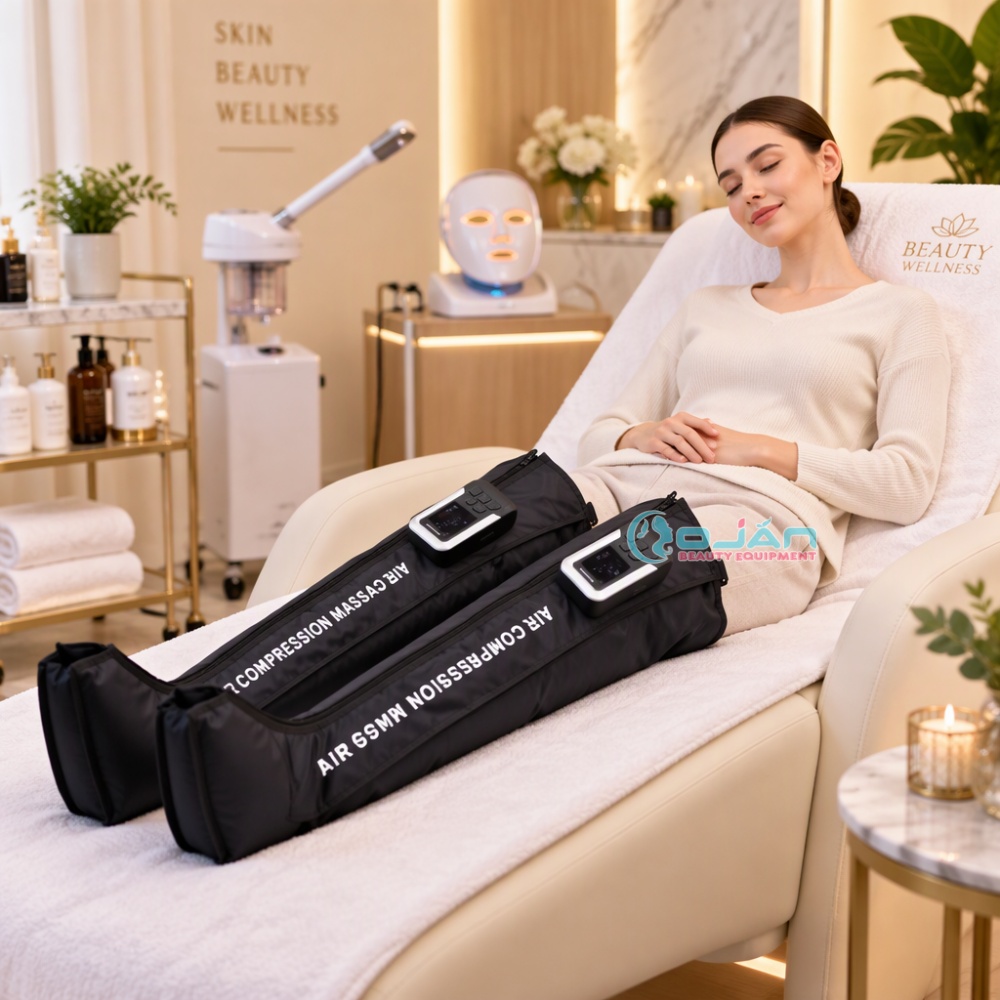
Each boot is a fabric sleeve lined with air chambers. A small pump inflates the chambers, holds the pressure briefly, then releases the air, and the cycle repeats for the length of the session. The result is a rhythmic squeeze that moves along the limb, which many users compare to a firm massage. The technique is called intermittent pneumatic compression, and sleeves are often sold as pneumatic compression boots.
Designs differ. Some inflate chambers in sequence from the foot to the thigh, while others use different patterns or inflate the whole sleeve at once. Controls usually cover intensity, program, and session time. Fit matters more than people expect. A loose sleeve will not squeeze evenly, and a tight one is uncomfortable, so check adjustable closures and sensible sizing.
Two cautions help set expectations. Products don’t share the same pressure range or sequence, so compare specifications rather than assume they’re the same. And air compression recovery boots are wellness devices, not the medical-grade compression systems used in hospitals for specific conditions.

Who May Find Compression Boots Useful
The most obvious group is people who train hard. Runners, cyclists, and gym regulars often use compression after long or intense sessions because the squeezing sensation relaxes tired legs, which is why recovery boots for athletes are the usual retail pitch.
Others benefit more quietly. People who spend long hours on their feet, such as hairdressers, nurses, and retail staff, sometimes use the boots to unwind after a shift, and travellers and desk workers do the same. Wellness businesses, from spas and recovery studios to sports clubs and salons, can offer a short compression session as an add-on without needing a treatment room or a trained therapist.
The common thread is comfort. Much of the benefit people describe is subjective, a feeling of lighter, looser legs, and it varies from person to person. That does not make it worthless, since comfort is a perfectly good reason to buy, but it does shape how a business should describe the service.
What the Research Says About Soreness and Recovery
A 2024 systematic review and meta-analysis in Biology of Sport pooled randomised trials of lower-limb pneumatic compression after exercise. Its clearest finding was a small-to-moderate reduction in muscle soreness, the outcome users tend to notice first. Perceived recovery improved only slightly. Effects on muscle function were small and not statistically significant, results for blood markers of muscle damage were inconsistent, and heart rate and lactate clearance were largely unchanged.
The authors called the evidence preliminary. Trials were small, few used placebo controls, and protocols varied widely in pressure and duration. In practical terms, that supports a modest claim. Compression may help legs feel less sore after hard training, but there is no solid basis to promise faster recovery, detoxification, or measurable gains in circulation.
That distinction matters to anyone selling the service or the product. Language built around comfort, relaxation, and post-exercise soreness is easier to defend than anything stronger. Research on other compression systems also can’t prove how a specific boot performs.
Settings, Comfort, and Safety
Good practice starts with the manual. Operators and users should follow the manufacturer’s instructions on pressure, session length, and sleeve care, and start gently before increasing intensity. Compression should feel firm but never painful, and numbness, tingling, or sharp discomfort are signs to stop.
Some people should get medical advice first. This includes anyone with a suspected or diagnosed blood clot, significant vascular or heart conditions, other circulation concerns, or skin problems or injuries in the area. A business offering sessions should screen clients with a short questionnaire and refer them to the manual’s contraindications before they first use air compression recovery boots.
No pressure, duration, or schedule suits everyone, and no honest supplier should claim one. Treat any figure in marketing material as a starting point to confirm against the device’s own instructions.
What Cordless Boots Change
Rechargeable operation removes the power cord and, in many designs, the separate pump unit. That makes setup quick and storage easy, and it lets you use them in a treatment chair, on a sofa, at a gym bench, or on the road. For mobile therapists, small studios, and retailers selling to home users, those advantages matter.
The trade-offs are worth weighing. Battery capacity limits how long air compression recovery boots run between charges, so runtime and charging time matter in a busy facility. Fit across different leg sizes, cleaning between users, and the durability of fabric and zippers deserve a closer look. Where several clients share one set, wipeable fabric and a clear cleaning routine matter. Wired professional systems often offer more chambers, more programs, and unlimited run time, so cordless compression boots are best seen as a convenient option rather than a like-for-like replacement. To compare, browse OJAN Beauty’s professional pressotherapy equipment.
Choosing Boots That Fit the Customer
Air compression recovery boots suit customers who want comfortable, low-effort relaxation after training or long days, and businesses that want a simple add-on service or retail line. They are not a substitute for medical assessment, rest, sleep, or good training habits. Choose by intended use, comfort, battery runtime, safety guidance, and portability, and describe benefits in terms the evidence supports.
A Closer Look at OJAN Beauty’s Rechargeable Leg and Foot Boots
OJAN Beauty’s Rechargeable Air Compression Leg & Foot Massage Boots, model MX-P28, are cordless air compression recovery boots that cover the calves, thighs, and feet. A built-in 2000 mAh lithium battery powers them, and they charge via USB at 5V/2A. Each sleeve measures 82 by 35 centimetres, with breathable fabric over internal airbags, and an automatic shut-off is built in. The boots are light enough to travel with and easy to store.

The controller displays pressure and session time and includes plus and minus buttons, a timer button, a power button, and a mode button. Its screen carries mode labels for Sequence, Circulation, and Whole. The number of airbags per boot, the exact pressure range, and the runtime per charge are not specified, so buyers should request them before ordering.
The boots are intended for relaxation and post-exercise recovery. Promotional claims about circulation and lactic acid removal are not established outcomes, so it’s safer to describe them as comfort-focused. They are listed as CE, RoHS, and FDA-compliant, so buyers should request the certificates and confirm what FDA status means in their market. The listed net weight of 1,233 g is given per single unit, so confirm whether that covers one boot or a pair.
For private label buyers, OEM options include logo printing, custom packaging and manuals, fabric and colourscolour choices, and adjustments to compression modes, battery capacity, or accessories. Standard OEM orders start at 100 units, and each carton holds 6 pieces.
Frequently Asked Questions
How do air compression recovery boots work?
Inflatable chambers in a fabric sleeve fill and release in programmed patterns, creating a rhythmic squeeze along the leg and foot. Patterns, pressure ranges, and chamber counts vary by product, so check the specifications of the model you plan to stock.
Do recovery boots actually reduce muscle soreness?
Current reviews suggest a small to moderate reduction in soreness after exercise, with only slight effects on perceived recovery and no clear effect on muscle function. The evidence is preliminary, so results vary.
Who should avoid using compression boots without medical advice?
Anyone with a suspected or diagnosed blood clot, significant vascular or heart conditions, skin problems, or injuries in the area should speak to a clinician first. Always follow the manual’s contraindications.
How long should a compression boot session last?
It depends on the device instructions and the user. Studies use a wide range of durations and pressures, so no universal schedule exists. Start gently and follow the manufacturer’s guidance.
Are cordless recovery boots suitable for professional facilities?
They can be, especially for mobile or space-limited services. Before committing, check battery runtime, charging time, fit across users, cleaning, durability, and service support.