

Beauty Salon Business Plan: 15 Powerful Strategies For Building A Profitable Global Salon Equipment Brand
The beauty industry is one of the most resilient and fast-growing sectors in the global economy. Whether you are a first-time entrepreneur or an experienced distributor looking to scale, having a strong beauty salon business plan is your most important asset. It defines your direction, your financials, and your long-term growth strategy.
This guide is built specifically for resellers, importers, distributors, and wholesalers who want to tap into the global demand for professional salon equipment. From understanding market trends to partnering with the right supplier, these 15 strategies will give you a clear roadmap for success.
Why the Global Beauty Industry Continues To Grow Rapidly

The global beauty and personal care market is valued at over $600 billion and continues to expand at a compound annual growth rate (CAGR) of around 5–7%. Consumers across every region are spending more on beauty treatments, skin care, and wellness services. This creates a direct and growing demand for the professional equipment that powers those services.
Urbanization, rising disposable incomes, and social media influence are three major drivers of this growth. As more people prioritize self-care, the demand for salons, spas, and aesthetic clinics rises and so does the need for advanced, reliable beauty machines.
How Salon Equipment Shapes Business Profitability
The equipment a salon uses directly affects its ability to deliver results, retain clients, and charge premium prices. Low-quality machines break down faster, generate client complaints, and damage reputation. In contrast, advanced salon equipment allows businesses to offer high-value treatments from laser hair removal to RF skin tightening that generate strong profit margins.
For distributors and wholesalers, this means the equipment you supply is not just a product. It is a business-critical asset for every salon owner you serve.
Understanding the Core Elements Of A Beauty Salon Business Plan
Executive Summary and Business Objectives
Every strong beauty salon business plan begins with a clear executive summary. This section outlines who you are, what you sell, who your customers are, and what you want to achieve within the next one to five years. It sets the tone for every other section of the plan.
Your business objectives should be specific and measurable. For example: distributing professional beauty devices to 200 salon owners across three countries within 18 months, or achieving a 35% gross profit margin on imported equipment by year two.
Target Audience: Resellers, Importers, Distributors, and Wholesalers
Understanding your target audience is critical. In the B2B beauty equipment space, your customers are not end consumers they are business owners. This includes:
- Salon owners and spa managers who need reliable machines for daily use
- Independent resellers who source equipment from overseas and sell locally
- Importers and distributors who move large volumes across regional markets
- Wholesalers supplying equipment to multiple retail points or clinics
Each of these buyer types has different needs, price sensitivities, and decision-making processes. Your beauty salon business plan must account for these differences.
Choosing the Right Beauty Equipment Supplier
Your supplier relationship is the backbone of your business. A reliable supplier provides consistent product quality, transparent pricing, flexible MOQs (minimum order quantities), and responsive after-sales support. They should also offer certifications such as CE, FDA, ISO, or RoHS, which are essential for selling into regulated markets like Europe and North America.
Market Research For The Modern Beauty Salon Industry

Global Demand for Advanced Beauty Salon Equipment
Market research is not optional it is a foundation of any serious beauty salon business plan. Globally, demand is strong across several categories: laser and IPL devices, ultrasonic and RF machines, hydrofacial systems, cryotherapy tools, and LED therapy equipment.
According to industry research, the global aesthetic devices market alone is projected to exceed $20 billion by 2030, driven by both clinical and salon-grade demand.
Emerging Trends in Aesthetic Devices and Salon Technology
Several trends are reshaping the industry:
- AI-powered skin analysis tools that personalize treatment protocols
- Multifunctional combo machines that offer 3-in-1 or 6-in-1 treatment capabilities
- Portable and home-use devices expanding the B2C channel
- Eco-conscious equipment with energy-saving designs and sustainable manufacturing
Distributors who stay ahead of these trends gain a competitive edge in their regional markets.
Regional Opportunities in Europe, Asia, the Middle East, and North America
Different regions present different growth opportunities. Europe demands CE-certified devices and places high importance on safety standards. The Middle East has seen explosive growth in aesthetic clinics and luxury salon services. Asia particularly South Korea and China leads in technology innovation. North America continues to be a premium market with strong demand for medical-grade aesthetic devices.
How to Build a Profitable Beauty Salon Equipment Distribution Model
Wholesale Vs Retail Beauty Equipment Strategies
Wholesale distribution offers scale but requires higher capital investment and strong logistics. Retail reselling offers higher margins per unit but slower volume. Most successful distributors begin with wholesale relationships to build cash flow and brand recognition, then add retail channels over time.
Your beauty salon business plan should clearly define which model or combination makes the most sense for your market stage and financial capacity.
Creating Long-Term Partnerships with Salon Owners
Rather than transactional sales, focus on building lasting partnerships with salon owners. This means offering training, after-sales service, consumable restocking, and business consultation. When a salon owner sees you as a partner rather than just a vendor, they return for repeat orders and refer others.
Private Label and OEM Opportunities in the Beauty Industry
Private labeling allows distributors to sell equipment under their own brand name. OEM (Original Equipment Manufacturer) partnerships allow for product customization. Both strategies increase perceived brand value and protect margins from pure price competition. If your volume supports it, working with an OEM supplier to create branded machines is a powerful long-term move.
Why Premium Salon Equipment Matters in a Beauty Salon Business Plan
Key Features Buyers Look for in Professional Beauty Machines
Professional buyers do not simply shop on price. They evaluate equipment based on:
- Clinical efficacy and treatment results
- Ease of use and staff training requirements
- Warranty and parts availability
- Brand reputation and supplier credibility
Durability, Certifications, and Safety Standards
In professional settings, equipment runs for hours daily. Durability is non-negotiable. Buyers also need internationally recognized certifications to sell treatments legally and maintain client trust. CE certification is mandatory for Europe; FDA clearance adds credibility for US-facing businesses; ISO 13485 is the benchmark for medical device manufacturing quality.
Technology Integration and Smart Beauty Devices
Modern salon equipment increasingly features digital touchscreens, app connectivity, automatic parameter memory, and AI-based skin detection. These features improve treatment consistency and client experience which makes them strong selling points for distributors targeting premium salon segments.
Financial Planning for a Beauty Salon Business Plan
Startup Costs and Equipment Investment Analysis
For distributors and importers, startup costs typically include initial inventory purchases, import duties and shipping logistics, storage and warehouse costs, marketing and trade show expenses, and after-sales support infrastructure.
A realistic budget analysis helps you identify funding needs and avoid cash flow surprises. Most equipment distributors require $20,000–$100,000+ in working capital to launch effectively, depending on market size and product range.
Profit Margin Strategies for Distributors and Importers
Healthy margin management is essential. Work backward from your target retail or wholesale price to determine the maximum allowable cost. Factor in shipping, duties, storage, and sales commissions. Beauty equipment distributors typically target 30–60% gross margins, though premium and branded products can command higher.
Revenue Forecasting and Business Scalability
Build a 12-month and 36-month revenue forecast based on realistic unit sales, average order values, and reorder rates. Scalability means designing your business model to handle 3x volume without 3x costs through systemized logistics, trained teams, and automated order management.
Digital Marketing Strategies for Beauty Equipment Businesses
SEO for Beauty Salon Equipment Suppliers
Search engine optimization (SEO) is the most cost-effective long-term marketing channel for B2B beauty equipment businesses. Target high-intent keywords like “professional beauty salon equipment supplier,” “wholesale laser hair removal machines,” and “aesthetic device distributor.” Create detailed product pages, supplier guides, and educational content that rank on Google.
Using AI Search Optimization and Semantic Content Marketing
Google’s AI Overviews and semantic search systems now reward content that demonstrates genuine expertise and addresses the full topic. This means creating content clusters around core topics like beauty salon business plans, rather than isolated keyword-stuffed pages. Answer real questions, use structured headings, and cite authoritative data.
B2B Lead Generation Through Content and Trade Platforms
Beyond Google, leverage platforms like Alibaba, Global Sources, and Made-in-China for trade visibility. Publish case studies and buyer guides on LinkedIn. List products on industry directories. Email marketing to captured leads from trade fairs and website inquiries remains one of the highest-ROI channels for equipment distributors.
How Ojan Beauty Supports Global Beauty Businesses

Advanced Beauty Salon Equipment Product Categories
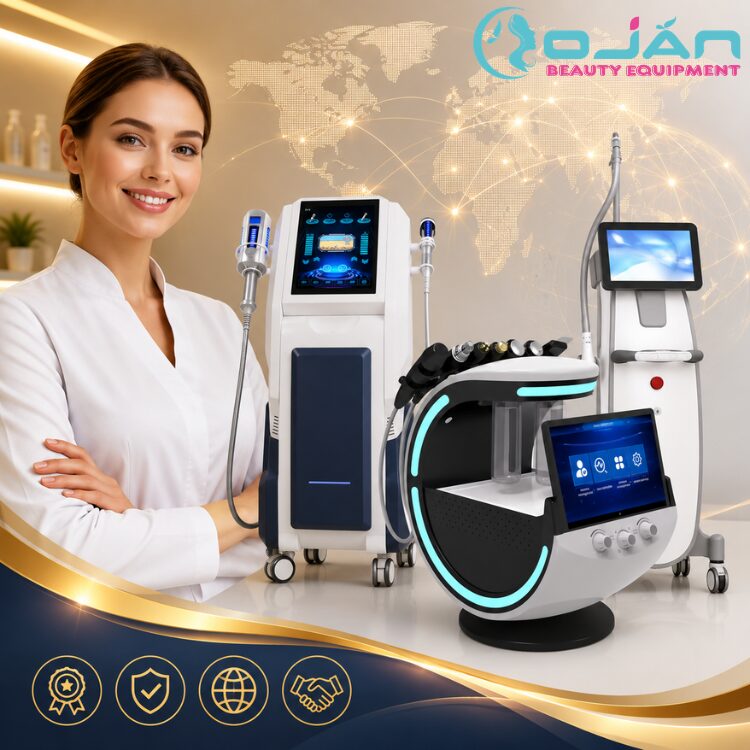
Ojan Beauty offers a comprehensive range of professional beauty equipment designed for salon owners, clinics, and distributors worldwide. Product categories include laser and IPL systems, RF and ultrasound body-contouring machines, hydrofacial and oxygen infusion devices, cryotherapy tools, LED therapy equipment, and multifunctional combo machines, all engineered to meet international quality standards.
Global Shipping and Wholesale Supply Capabilities
Ojan Beauty ships to markets across Europe, Asia, the Middle East, Africa, and North America. With flexible MOQs for first-time importers and competitive wholesale pricing for bulk orders, the company supports businesses at every growth stage. Logistics coordination, export documentation, and customs support are part of the service package.
Quality Assurance and Customer Support Excellence
Every Ojan Beauty device undergoes rigorous quality control before shipment. CE, ISO, and relevant safety certifications are maintained across the product range. A dedicated customer support team assists distributors with product training, troubleshooting, and after-sales queries ensuring that the businesses you supply remain confident in the equipment they use.
Operational Planning for International Beauty Equipment Distribution
Inventory Management and Logistics Optimization
Efficient inventory management prevents both stockouts and excess capital tied up in unsold goods. Use demand forecasting based on historical sales data and market seasonality. Partner with freight forwarders who specialize in beauty and medical device logistics for reliable, cost-effective shipping.
Import Regulations and Compliance Considerations
Each country has unique import regulations for beauty and medical devices. Research HS codes, import duties, VAT implications, and product registration requirements for each target market. Non-compliance can result in shipments being held at customs, financial penalties, or product bans.
Building Reliable After-Sales Support Systems
After-sales support is a key differentiator in the equipment business. Create service protocols for warranty claims, spare parts supply, and technical troubleshooting. Offer video tutorials and user manuals in the buyer’s language. A strong after-sales reputation reduces churn and generates word-of-mouth referrals.
Technology and Innovation in the Future of Beauty Salon Businesses
AI-Powered Beauty Devices and Automation Trends
The next generation of beauty devices is embedded with artificial intelligence. AI skin scanners analyze skin type and condition in real time, recommending personalized treatment settings automatically. These systems improve treatment safety, reduce operator error, and increase client satisfaction making them highly attractive to premium salons and aesthetic clinics.
Sustainable and Eco-Friendly Beauty Equipment Solutions
Sustainability is becoming a purchasing criterion for many salon owners and their clients. Equipment manufacturers are responding with energy-efficient designs, recyclable materials, and reduced-chemical consumables. Distributors who prioritize eco-certified products will be better positioned as regulatory and consumer pressure on sustainability increases.
Common Mistakes to Avoid in a Beauty Salon Business Plan
Ignoring Market Trends and Customer Preferences
Many distributors fail because they source equipment based on supplier availability rather than market demand. Always validate product choices against current salon owner needs and emerging treatment trends in your target region.
Choosing Low-Quality Beauty Equipment Suppliers
Cost-cutting on supplier quality is the most expensive mistake in this industry. Low-quality machines generate returns, refund demands, reputational damage, and potential liability. Always request product samples, factory audits, and certification documentation before committing to a supplier.
Weak Branding and Poor Digital Presence
In a global market, your online presence is your credibility. A professional website, active trade platform listings, and consistent social media presence signal legitimacy to prospective buyers. Weak branding loses deals before the first conversation even starts.
For further reading on global beauty industry trends and market forecasts, visit the Statista Global Beauty & Personal Care Market Overview a widely cited, publicly accessible source for beauty industry data and projections.
FAQs About Beauty Salon Business Plan
Q1. What should a beauty salon business plan include?
A complete beauty salon business plan should include an executive summary, market analysis, target customer profiles, product and supplier strategy, financial projections, marketing plan, and operational framework. For equipment distributors, it should also cover logistics, import compliance, and after-sales support.
Q2. How profitable is the beauty salon equipment business?
Beauty salon equipment distribution can be highly profitable, with gross margins typically ranging from 30% to 60% depending on product category, brand positioning, and market. Premium and certified equipment commands higher margins. Businesses with private label or OEM products enjoy stronger pricing power.
Q3. Why is choosing the right beauty equipment supplier important?
Your supplier determines product quality, delivery reliability, certification compliance, and after-sales support. A poor supplier relationship results in delayed shipments, non-compliant products, and unhappy customers. The right supplier becomes a strategic partner in your long-term business growth.
Q4. How can distributors grow in the global beauty market?
Distributors can grow by expanding into new regional markets, adding private label product lines, building direct relationships with salon chains and aesthetic clinics, investing in digital marketing and SEO, and attending international trade fairs like Cosmoprof, Beauty Düsseldorf, or Beautyworld Middle East.
Q5. What certifications are important for beauty salon equipment?
The most important certifications include CE (Europe), FDA clearance (United States), ISO 13485 (medical device quality management), RoHS (restriction of hazardous substances), and FCC (electromagnetic compatibility). Requirements vary by country, so always verify what is mandatory in each target market.
Q6. How does Ojan Beauty support international wholesalers and importers?
Ojan Beauty supports international buyers through flexible wholesale pricing, flexible MOQs, CE and ISO-certified product ranges, global shipping coordination, multilingual customer support, and comprehensive after-sales service making it a trusted partner for distributors at all growth stages.
Wrapping It Up
The beauty industry rewards those who plan carefully and execute with precision. A well-constructed beauty salon business plan is not just a document it is your competitive advantage. It guides every decision, from supplier selection and inventory management to digital marketing and financial forecasting.
For distributors, importers, and wholesalers, the opportunity in global beauty equipment is significant and growing. The key is to align yourself with suppliers who share your commitment to quality, compliance, and customer service. That is exactly what Ojan Beauty offers.
By combining premium products, international certifications, flexible wholesale programs, and reliable logistics support, Ojan Beauty is built to be more than a supplier it is a growth partner for beauty businesses worldwide.
Whether you are launching your first import order or scaling an established distribution network, now is the right time to invest in a smarter, stronger beauty salon business plan. The market is growing. The demand is real. The question is whether your business is positioned to capture it.
Start with the right plan. Partner with the right supplier. Build something that lasts.