

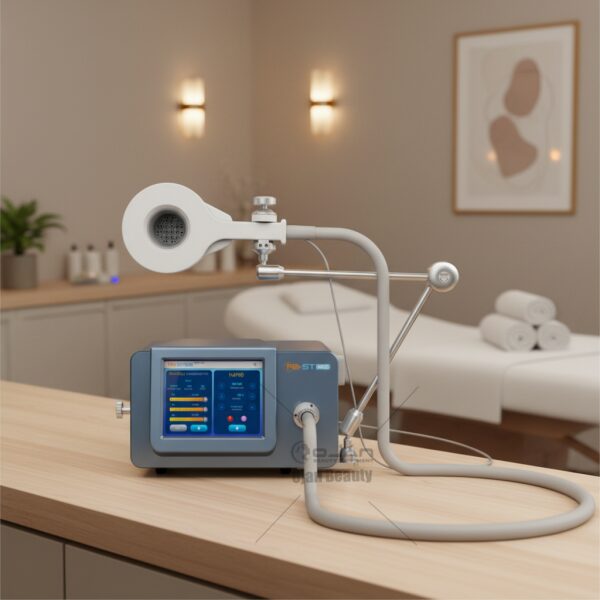
Innovations in Shockwave Therapy Machine Technology
Innovations in Shockwave Therapy Machine Technology
Introduction: from single-function devices to smart therapy platforms
Shockwave therapy has evolved rapidly from a niche physiotherapy tool into a mainstream medical-aesthetic technology. Earlier systems were bulky, limited in settings, and largely manual. Today’s shockwave therapy machines are compact, programmable, multi-modal, and workflow-driven, allowing clinics to treat pain, musculoskeletal conditions, body contouring concerns, and wellness indications with far greater precision.
At the center of this evolution is a shift toward control, versatility, and integration. Manufacturers like Ojan Beauty reflect this shift by offering machines that combine shockwave therapy with complementary technologies such as radiofrequency (RET/CET), EMS, magnetotherapy, and near-infrared light—helping clinics deliver broader results with fewer devices.
Key technological innovations shaping modern shockwave therapy
- Precision energy delivery and adjustable protocols
One of the most important innovations is greater control over treatment parameters. Modern shockwave machines allow practitioners to fine-tune:
- Energy intensity
- Frequency (Hz)
- Pulse count
- Treatment duration
This precision makes treatments safer, more comfortable, and indication-specific, whether the goal is pain relief, tissue stimulation, or aesthetic remodeling. Ojan Beauty systems emphasize preset protocols combined with manual adjustability, enabling both standardized treatments and customized care.
- Ergonomic handpieces and applicator design
Innovation is no longer limited to the main console. Applicator technology has improved significantly:
- Ergonomic grips reduce practitioner fatigue
- Interchangeable heads allow treatment of different tissue depths
- Durable components improve consistency and machine lifespan
These upgrades improve workflow efficiency and treatment accuracy—especially in high-volume clinics.
- Multi-modality integration: the biggest leap forward
One of the most visible trends in the market is the rise of multi-modality therapy platforms, where shockwave therapy is integrated with complementary technologies such as radiofrequency, EMS, magnetotherapy, or light-based therapies.
This convergence is not merely a marketing strategy. When designed correctly, these technologies work sequentially and synergistically:
- Shockwave therapy primes tissue and improves circulation
- Radiofrequency (e.g., RET/CET systems) enhances deep tissue warming and conductivity
- EMS activates neuromuscular response
- Light-based therapies support metabolic and recovery processes
Such platforms allow clinics to design layered treatment protocols, addressing multiple physiological targets within a single session. This innovation improves clinical outcomes while also supporting operational efficiency and faster return on investment.
- Integration with tissue recovery timelines
Modern shockwave therapy machines are no longer optimized solely for single-session intensity. Instead, they are designed to support biologically realistic treatment schedules that align with tissue recovery and remodeling cycles.
This includes:
- Lower-frequency regenerative protocols
- Shorter, repeatable sessions with cumulative effects
- Treatment sequencing that respects healing timelines
This evolution reflects a more mature understanding of how tissues respond over weeks rather than minutes, positioning shockwave therapy as a long-term regenerative intervention rather than a quick symptomatic fix.
Data-Driven Treatment Planning and Software Integration
An emerging innovation in shockwave therapy systems is the increasing role of software in treatment planning and consistency. Earlier machines operated almost entirely as hardware tools, relying on operator judgment for every session. Current systems increasingly incorporate software features that allow practitioners to store treatment parameters, recall previous settings, and maintain consistency across multi-session therapy cycles.
This is particularly important for shockwave treatments that depend on cumulative biological effects rather than immediate results. Software-assisted parameter recall reduces operator variability and improves repeatability, especially in clinics with multiple practitioners.
Another notable development is interface design aligned with clinical workflow. Simplified touchscreens, structured parameter ranges, and guided operation reduce the learning curve and lower the risk of incorrect settings. As shockwave therapy continues to expand beyond specialist rehabilitation centers, software integration is becoming a key factor in improving scalability, reliability, and long-term clinical value.
Key benefits of modern shockwave therapy machines
- Faster tissue recovery
Modern shockwave machines stimulate blood flow and cellular activity, helping tissues heal faster. This makes them effective for chronic pain, muscle stiffness, and slow-healing soft tissue conditions.
- Non-invasive alternative
Shockwave therapy delivers results without injections, surgery, or medication. Patients experience minimal discomfort and no downtime, which increases acceptance and repeat sessions.
- Higher treatment precision
New systems allow accurate control of energy level, frequency, and pulse count. This prevents over-treatment and improves consistency across sessions and operators.
- Better patient comfort
Improved pulse smoothness, reduced noise, and ergonomic applicators make treatments more tolerable, increasing patient compliance with full treatment plans.
- More services from one machine
Modern machines—especially multi-modality platforms—allow clinics to treat pain, recovery, body contouring, and wellness concerns using a single system.
- Stronger business value for clinics
Fewer machines, shorter sessions, and lower maintenance reduce operating costs while improving return on investment.
Comparison: Early-Generation vs Current-Generation Shockwave Therapy Systems
- Energy generation and output stability
Early-generation shockwave systems rely on mechanically produced pulses that tend to fluctuate during extended use, leading to inconsistent energy delivery. Current-generation systems employ digitally regulated output, allowing energy levels to remain stable throughout the treatment session and improving dose reliability.
- Pulse structure and tissue interaction
Earlier systems deliver relatively uniform pulses with limited flexibility, resulting in non-specific tissue stimulation. Current systems allow finer adjustment of pulse frequency and intensity, enabling practitioners to better match acoustic energy to tissue characteristics and therapeutic objectives.
- Depth control and energy distribution
Early systems offer limited control over penetration depth, increasing variability in tissue response. Current-generation designs focus on controlled energy dispersion or focal behavior, supporting more predictable interaction with superficial or deeper tissue layers.
- Thermal behavior and component durability
Prolonged use of early shockwave systems often leads to heat accumulation and gradual decline in performance. Newer engineering approaches incorporate thermal regulation and reinforced transducer components, helping maintain performance accuracy and extending operational lifespan.
- Treatment repeatability and standardization
Earlier shockwave therapy outcomes depend heavily on operator technique. Current-generation systems support protocol-based delivery, improving consistency across sessions and reducing inter-operator variability in clinical settings.
- System integration and treatment sequencing
Early shockwave devices function primarily as standalone units. Current systems are increasingly designed to operate within multi-modality treatment environments, allowing structured sequencing with technologies such as radiofrequency, neuromuscular stimulation, or light-based therapies.
- Application scope and scalability
Earlier systems are typically limited to narrow therapeutic use cases. Current-generation platforms support broader clinical and aesthetic applications without requiring hardware modification.
Ojan Beauty Devices in Practice: Focused Shockwave and Hybrid Therapy Systems
Physical Therapy ED Focused ShockWave Therapy Machine
Product Link: Physical Therapy ED Erectile Dysfunction Focused ShockWave Therapy Machine — https://ojanbeauty.com/product/physical-therapy-ed-erectile-dysfunction-focused-shockwave-therapy-machine/
Description & Features
The Physical Therapy ED Focused ShockWave Therapy Machine is engineered for clinics and rehabilitation centres seeking a solution to address erectile dysfunction and other targeted tissue conditions. It uses controlled shockwave energy — a mechanical wave with rapid pressure rise followed by gradual decline — to stimulate blood circulation and encourage the natural repair process in the treated area.
Key Benefits:
- Designed for precision shockwave delivery to targeted tissues.
- Aims to improve vascularisation and nutrient delivery in the affected zone.
- Offers OEM service and factory pricing, which can be attractive for distributors and clinics seeking customization.
- Supports non-invasive therapy without reliance on surgery or pharmaceuticals, broadening treatment options.
This machine combines shockwave technology with practical clinic use, making it suitable for rehabilitation centres dedicated to therapeutic and vascular-focused applications.

Physical Therapy Ed Erectile Dysfunction Focused ShockWave Therapy Machine
2) 2-in-1 Near-Infrared Light Pain Relief & PHYSIO MAGNETO
Product Link: 2 In 1 Near-Infrared Light Pain Relief Physical Therapy Equipment & PHYSIO MAGNETO — https://ojanbeauty.com/product/near-infrared-light-pain-relief-physical-therapy-equipment-physio-magneto-magnetotherapy/

2 In 1 Near-Infrared Light Pain Relief Physical Therapy Equipment & PHYSIO MAGNETO | Magnetotherapy
Description & Features
This hybrid device combines near-infrared light therapy with magnetotherapy, offering a powerful non-invasive approach for pain management and tissue recovery. It is designed for clinics, rehab centres, and therapeutic practices aiming to support pain relief and functional recovery through two complementary modalities.
Near-infrared light penetrates deep into muscle tissue to support circulation, tissue repair, and inflammation reduction. Magnetotherapy uses pulsed electromagnetic fields to help manage chronic pain, degenerative joint issues, and muscle strain.
Key Benefits:
- Combines two therapeutic methodsin one system, expanding clinical utility.
- Supports deeper tissue stimulation and recovery through NIR light penetration.
- Magnetotherapy enhances vascular and musculoskeletal recovery.
- Integrated applicators and adjustable settings allow hands-free therapy, improving clinic workflow.
The dual-function design increases value for practices that offer multidisciplinary therapies — from pain relief to physical rehabilitation — with efficient use of space and resources.
Conclusion: redefining innovation in shockwave therapy
Innovation in shockwave therapy machine technology is no longer defined by raw power or isolated features. Instead, it is shaped by precision, integration, usability, and biological relevance. Modern systems are engineered to deliver controlled energy, support regenerative processes, and integrate seamlessly into clinical workflows.
As shockwave therapy continues to expand across medical and aesthetic disciplines, the most successful technologies will be those that balance scientific understanding with practical design—delivering consistent outcomes while enhancing both practitioner efficiency and patient experience. Ojan Beauty’s selected systems provide practical examples of how these broader industry innovations are being translated into real-world devices, without defining the landscape on their own.