

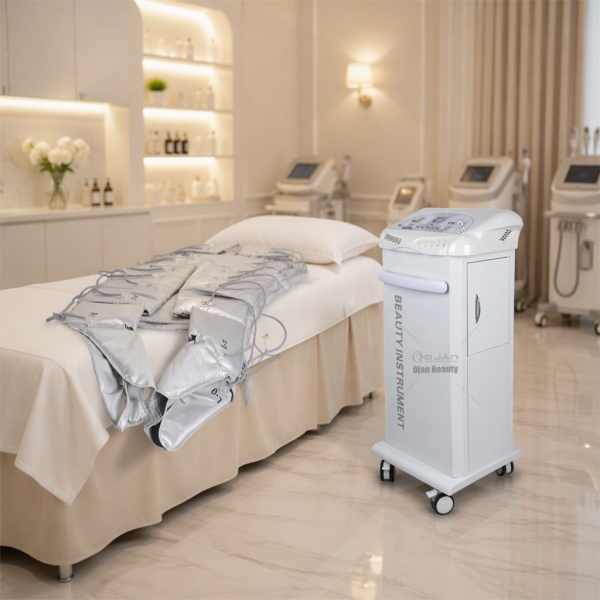
What Is a 3-in-1 Pressotherapy Machine and How Does It Work?
A 3-in-1 pressotherapy machine is easier to understand when you stop thinking of it as one treatment. Inside the same setup are three separate functions: pneumatic compression, far-infrared heat, and electrical muscle stimulation, better known as EMS. Each does a different job, and they can be used alone or together during one appointment.
The compression suit tightens and releases around the body in sections. Heating elements warm the covered areas, while EMS pads make selected muscles contract. For a clinic, that means one machine can support several types of sessions without filling the treatment room with separate devices.
People usually book pressotherapy for heavy-feeling legs, relaxation, exercise recovery, lymphatic drainage support, or cosmetic body care. It should not be sold as a shortcut to fitness or medical treatment. What it offers is more straightforward: controlled pressure, adjustable warmth, and muscle stimulation in one session.
What Is a 3-in-1 Pressotherapy Machine?
The “3-in-1” label refers to the technology, not the number of garments or preset programs. A complete system will usually include a control console, a chambered compression suit, infrared heating sections, EMS pads, air hoses, and connecting leads.
Its three functions are:
- Pneumatic pressotherapy: Inflatable chambers tighten and release in a programmed sequence.
- Far-infrared thermotherapy: Heating elements warm the areas covered by the suit or blanket.
- Electrical muscle stimulation: Electrode pads send mild pulses that make nearby muscles contract and relax.
A suitable example is Ojan Beauty’s Professional 3-in-1 Pressotherapy Machine with EMS and Infrared Therapy. Listed as model MX-P51D, it combines a full-body compression suit, infrared heating, and adjustable EMS in one professional system.

Another option is the IB-8108/IB-8108C 3-in-1 EMS Infrared Pressotherapy Machine. It uses the same three core technologies but has a different garment arrangement, control design, and accessory package.

How Does a 3-in-1 Pressotherapy Machine Work?
All three functions have their own controls. Pressure, temperature, EMS strength, and treatment time can be adjusted instead of putting every client through the same routine.
1. Pneumatic Compression Creates a Pressure Wave
Pressotherapy begins with a garment containing several inflatable air sections. A pump inside the console sends air into those sections in a set order, usually starting at the feet or lower legs and moving upward. One section inflates, the next follows, and the earlier section releases as the cycle continues.
The result is a rolling squeeze rather than one long hold. It feels somewhat like a blood-pressure cuff moving gradually up the body. This directional action is intended to help venous blood and tissue fluid move away from the extremities. The pressure may feel firm, but it should never hurt.
The MX-P51D uses a suit arranged into 10 compression sectors covering areas such as the legs, arms, and abdomen. Its controls allow the practitioner to adjust pressure according to the session and the client’s comfort.
2. Far-Infrared Heat Adds Controlled Warmth
An infrared pressotherapy machine contains heating elements inside the garment or treatment blanket. Rather than heating the whole room, those elements warm the covered areas of the body. Temperature controls allow the practitioner to start gently and increase the warmth when appropriate.
For many clients, heat makes the session feel less mechanical. It can be pleasant after exercise or a long day spent sitting, particularly when the muscles already feel tight. Warming the skin may widen surface blood vessels and increase local circulation. Perspiration is common at stronger settings, though one client may sweat more than another.

The MX-P51D lists an adjustable temperature range of 30°C to 70°C. That does not mean every treatment should reach the upper limit. Heat should be selected according to comfort, skin sensitivity, session length, and the person’s ability to sense temperature normally.
Sweating results in short-term water loss; it is not the same as losing body fat. That difference often gets blurred in promotional claims. In practical use, far-infrared therapy has a simpler purpose: it supplies adjustable warmth and can make the compression treatment feel more comfortable.
3. EMS Activates Selected Muscles
An EMS pressotherapy machine uses adhesive electrodes positioned over suitable muscle groups, often on the abdomen, thighs, arms, or gluteal area. Low-frequency electrical pulses travel through the pads and stimulate motor nerves. The nearby muscles then contract and release without the client performing a voluntary movement.
At first, EMS feels like a light tingling. As the strength rises, that sensation turns into a noticeable tapping or tightening beneath the pads. Good electrode placement matters, as does full contact with the skin. Intensity should be raised gradually, with the client’s feedback guiding the final level.

The MX-P51D offers adjustable electrostimulation from 0 to 40 mA and an EMS frequency range of 1 to 30 Hz. The IB-8108/IB-8108C comes with 10 pairs of electrostimulation outlets and 20 electrode patches in different sizes.
EMS adds a muscle-activation element to body-care sessions, but it does not replace exercise or strength training. Settings that are too strong may cause discomfort, skin irritation, or temporary muscle soreness.
Main Parts of a Professional Pressotherapy Machine
Most 3-in-1 systems are built from the same core parts:
- Control console: Manages the compression program, heat, EMS strength, and treatment time.
- Air pump: Inflates and deflates the chambers inside the garment.
- Compression suit: Covers body areas such as the feet, legs, waist, abdomen, and arms.
- Infrared heating elements: Provide adjustable warmth through the suit or blanket.
- EMS channels and pads: Carry electrical pulses to selected muscle groups.
- Air hoses and cables: Connect the console to the compression garment, heating zones, and electrodes.

The exact package depends on the model. The MX-P51D includes a compression suit, air hose set, EMS pads, power cord, and user manual. The IB-8108/IB-8108C includes a treatment blanket, 20 electrode patches, 10 electrical wires, elastic bands, and the main console.
What Happens During a Pressotherapy Session?
A professional pressotherapy session should begin with a conversation, not with the start button.
Client Screening and Preparation
Before fitting the garment, the practitioner asks about health conditions, unexplained swelling, recent surgery, pregnancy, medication, skin sensation, and implanted electronic devices. The client then changes into suitable clothing and settles onto the treatment bed.
If EMS will be used, the pads are placed before the compression suit is fully secured. The practitioner then connects the air hoses, heating leads, and EMS cables to the correct ports.
The suit should fit evenly before inflation begins. A loose section may lose pressure, while an overly tight section could become uncomfortable after the chambers fill with air.
Starting the Three Functions
The first few minutes are usually gentle. Compression begins its programmed cycle, the heat rises gradually, and EMS is increased until the contractions are clear but tolerable.
The MX-P51D has an adjustable timer of up to 60 minutes. The proper duration will depend on the client, selected settings, treatment plan, and staff protocol. A longer appointment is not automatically more useful than a shorter one.
The practitioner should check the client’s comfort throughout the treatment. Pressure, temperature, or EMS strength must be lowered if the person reports pain, numbness, dizziness, unusual shortness of breath, or excessive heat.
Once the program ends, the air chambers deflate and the suit is removed. Some clients notice warmth and relaxation, while others mainly describe a temporary feeling of lighter legs.
Cleaning the Equipment
The compression suit, electrode pads, cables, and contact surfaces should be cleaned according to the manufacturer’s instructions. This is particularly relevant in a busy clinic where several people may use the same machine during the day.
Staff should check the hoses and connectors for damage or air leaks as part of routine care. Worn pads and damaged cables should be replaced rather than reused.