

How Long Does It Take to See Results from Ultrasonic Cavitation?
“When will I actually see something?”
It’s the question every client asks before their first session, and it’s usually followed by a second, unspoken one: “Is this even going to work?” Fair questions. Nobody wants to sit through a course of appointments on a promise alone.
Here’s the answer, no fluff: early changes typically show up within three to four sessions, but the results worth photographing don’t arrive until 6 to 12 weeks after a full treatment course ends. That gap between “session done” and “results visible” is where most confusion, and most dropped clients, come from. Once you understand why the gap exists, the whole treatment makes a lot more sense.
The Science: What Cavitation Actually Does to Fat Cells
Ultrasonic cavitation uses low-frequency sound waves, typically somewhere in the 30 kHz to 80 kHz range, to create microscopic pressure changes in the fluid surrounding fat cells. Those pressure changes form tiny bubbles that collapse in on themselves, physically disrupting the walls of fat cells in the treated area. Once that membrane breaks down, the fat inside is released as glycerol and free fatty acids, which your body then needs to process and clear out through the lymphatic system and liver, the same way it processes fat from anywhere else.
That last part is the key to understanding the timeline. Cavitation doesn’t remove fat the way liposuction does. It breaks it down and hands the job of clearing it to your own body. Your lymphatic system doesn’t work overnight, which is exactly why results build gradually instead of appearing the moment you step off the treatment table.
Your Results Timeline, Session by Session
Day One: Don’t Trust What You See Yet
Some clients notice a subtle tightening or smoothing sensation in the treated area immediately after a session. This is a real effect, but it’s mostly temporary swelling reduction and mild tissue response, not fat loss. Don’t judge the treatment on this stage. One session simply isn’t enough data.
Sessions 2 to 4: The First Real Signs
This is usually when the first genuine signs of change appear. Clients often describe clothes fitting slightly looser or a small reduction in circumference around the treated area. It’s subtle, and it’s not the “after” photo moment yet, but it’s a useful checkpoint. If you’re testing whether cavitation is right for your body type, three to four sessions is generally enough to judge early response.
Sessions 6 to 10: Visible, Measurable Change
By this point, most people see visible, measurable improvement. This is where a full treatment course typically lands, and it’s the stage clinics usually recommend as the standard package. Sessions are generally spaced anywhere from a few days to a week apart, giving the lymphatic system enough time to clear fat between appointments rather than overwhelming it.
6 to 12 Weeks Later: The Results You’ll Actually Photograph
Here’s the part most people don’t expect: your best results don’t show up right after your last appointment. They show up weeks later. The body continues metabolizing released fat cells for several weeks post-treatment, and if the machine used also delivers radiofrequency energy, collagen remodeling continues even longer, often peaking around 4 to 8 weeks and visibly improving skin firmness for 3 to 6 months. This is exactly why experienced clinics take “after” photos at the 8 to 12 week mark rather than the day after treatment ends.
6 Factors That Speed Up (or Slow Down) Your Results
There’s no single number of sessions that applies to everyone, because a handful of real, physiological variables shift the timeline:
- Treatment area size. Smaller areas like the chin or upper arms tend to show visible change faster than larger areas like the abdomen or thighs, simply because there’s less tissue to process.
- Skin elasticity. Skin that retains more elasticity tends to visibly tighten faster than skin that has lost elasticity, which needs more collagen-building sessions to show the same firmness.
- Starting body composition. Cavitation works best as a contouring tool for people who are already close to their target weight and want to address specific stubborn pockets. It isn’t a weight-loss treatment, and it shouldn’t be marketed to clients as one.
- Consistency between sessions. Skipping sessions or spacing them too far apart interrupts the cumulative effect the treatment relies on. Sticking to the recommended schedule matters more than most clients expect.
- Hydration and activity level. Because the lymphatic system does the actual clearing, clients who stay hydrated and keep moving between sessions tend to see results show up faster than those who don’t.
- Equipment quality. This one matters more than most marketing admits. Machines with inconsistent frequency output or weak acoustic power require more sessions to produce the same disruption a properly calibrated professional machine achieves in fewer visits.
That last point is where the machine you’re using, or offering to clients, genuinely changes the math on timeline expectations.
How to Tell It’s Working Before the Mirror Does
Because cavitation results build slowly, it helps to know what progress actually looks like along the way, rather than waiting for a dramatic before-and-after moment that may not arrive until weeks later. A few realistic markers to track:
- Circumference, not the scale. Cavitation reshapes and reduces specific areas rather than lowering overall body weight, so a measuring tape around the treated area is a far better progress indicator than a bathroom scale.
- How clothes fit. Many clients notice change here before they notice it in the mirror, since fabric picks up on small reductions in circumference that are harder to see visually.
- Skin texture and firmness. If the machine includes RF or vacuum therapy alongside cavitation, gradual improvement in skin smoothness is often one of the earliest visible signs, even before fat reduction becomes obvious.
- Consistency of the treated area’s response session to session. A treatment that’s working should show incremental, cumulative change. If nothing has shifted at all by session four or five, it’s worth reassessing the protocol, the treatment area, or the equipment being used.
Tracking progress this way keeps expectations grounded in what the treatment can realistically deliver, and it gives clinics concrete data to show clients who might otherwise assume nothing is happening simply because the mirror hasn’t changed yet.
Why Smart Clinics Set This Expectation on Day One
If you’re running a clinic, this timeline isn’t just useful for your own understanding, it’s the exact information your clients need before they book. Clients who understand that results build over 6 to 12 weeks, rather than expecting an overnight transformation, are far more likely to complete a full session package and leave satisfied. Clients who go in expecting instant results after one session are the ones who cancel their remaining appointments and leave a disappointed review.
Setting this expectation upfront, before the first session even starts, is one of the simplest ways to improve client retention and satisfaction. It also puts the spotlight on something clinics can control directly: the consistency and power of the equipment doing the work.
The Equipment That Shortens the Timeline
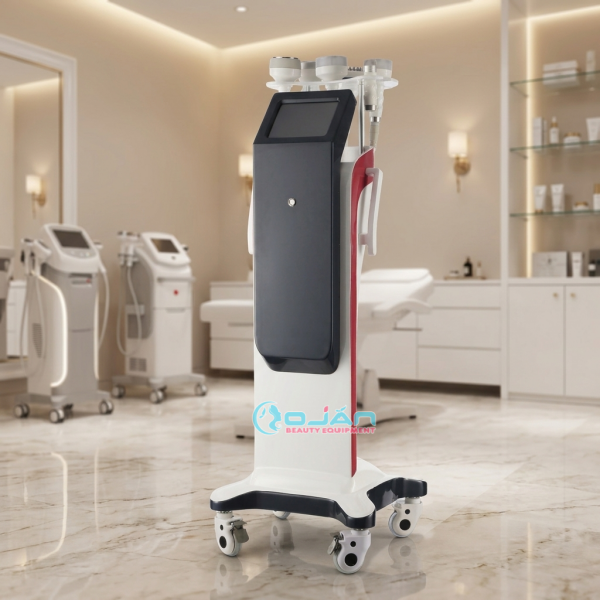
Here are two machines from Ojan Beauty built with that in mind.
1. Professional 7 In 1 Multifunctional Cellulite Removal Ultrasonic Cavitation Slimming Machine
This machine pairs a high-intensity focused acoustic head, running at a concentrated 40,000Hz, with several supporting treatment heads designed to work alongside the core cavitation function. Its RF negative pressure vacuum head speeds up circulation and lymphatic drainage after fat cells are broken down, which is precisely the process that determines how fast results appear. It also includes a magnetic vibration head that supports collagen regeneration and skin elasticity, addressing the skin-tightening side of the timeline alongside the fat-reduction side. For clinics that want one machine covering both stages of the results process, this is a well-rounded option.

2. 5 In 1 Commercial Body Contouring Skin Tightening Vacuum RF Ultrasonic Cavitation Machine
Built for clinics that want to combine cavitation with more comprehensive skin-tightening capability, this machine layers ultrasonic cavitation with radiofrequency skin tightening, vacuum therapy, multi-polar RF for facial treatments, and LED light therapy. The RF component is particularly relevant to the timeline conversation, since combining cavitation with radiofrequency has been shown to accelerate visible skin tightening on top of the fat-reduction effect. It’s designed as a genuine dual-purpose machine, giving clinics the ability to treat both body contouring and facial rejuvenation with the same investment.
👉 View the 5 In 1 Commercial Body Contouring Skin Tightening Vacuum RF Ultrasonic Cavitation Machine

So, How Long Will It Actually Take?
Ultrasonic cavitation isn’t a same-day transformation, and it was never meant to be. Early signs of change typically show up within the first three to four sessions, a full course of 6 to 12 sessions is where most people see meaningful, visible improvement, and the true final results reveal themselves 6 to 12 weeks after the last appointment, once the body has finished processing what the treatment released. Understanding that timeline, and having the right equipment to support it, is what separates a clinic that keeps clients coming back from one that loses them after session one.