

The Real Emsculpt Machine Guide: Technology, True Cost & How To Buy Wholesale (2026)
Buying an Emsculpt-style machine is a big decision, whether you’re a clinic owner adding a new service, a salon expanding your menu, or a distributor sourcing units to resell across your region. The market is crowded with confusing price tags, vague technical claims, and knockoff machines dressed up to look like the real thing.
This guide breaks down exactly what these machines do, what they should cost at each quality tier, and how to vet a supplier before you commit. It’s written by the equipment and export team at Ojan Beauty, a China-based manufacturer that has built and shipped HIEMT (High-Intensity Electromagnetic Muscle Training) equipment to clinics and resellers worldwide since 2008. We work directly with the factories that build these coils, so we know where the real cost differences come from, and where corners get cut.
One quick note before we start: Emsculpt® is a registered trademark of BTL Industries. This article uses “Emsculpt machine” the way most buyers search for it, as a general term for HIFEM/HIEMT electromagnetic muscle-sculpting devices, while clearly separating the original branded device from the wider category of HIFEM equipment, including the private-label machines we manufacture.
What Is an Emsculpt Machine? HIFEM Technology Explained

An Emsculpt machine uses High-Intensity Focused Electromagnetic (HIFEM) energy to make a muscle contract far harder than it can on its own. A coil inside the applicator generates a focused magnetic field. That field passes through the skin and creates an electrical current inside the muscle tissue below it. The current forces motor neurons to fire, and the muscle contracts.
A voluntary muscle contraction, like a sit-up, recruits a portion of your muscle fibers. A HIFEM-induced contraction, sometimes called a “supramaximal” contraction, recruits nearly all of them at once, and it does this thousands of times in a single session. That’s a workload the body cannot produce through exercise alone.
How HIFEM Muscle Stimulation Works, Step by Step

- The applicator is placed against the treatment area (abdomen, buttocks, thighs, or arms).
- The coil inside pulses a focused magnetic field into the tissue.
- That field induces an electrical current in the underlying nerves.
- The current triggers rapid, forced muscle contractions, often 20,000+ in a 30-minute session.
- The muscle adapts to this repeated overload the same way it adapts to heavy resistance training: by building new protein structures and thickening muscle fibers.
What Results Can Buyers Realistically Expect

This is where a lot of marketing content oversells. Independent, peer-reviewed research gives a clearer picture. A randomized controlled trial published in Plastic and Reconstructive Surgery, the official journal of the American Society of Plastic Surgeons, found that patients receiving combined HIFEM and RF treatment saw an average 20.5% decrease in abdominal fat with a 21.5% increase in abdominal muscle thickness after just one month, with results holding for up to six months. A separate multicenter study published in the Journal of Clinical and Aesthetic Dermatology measured similar HIFEM+RF effects specifically in the upper arm using MRI, tracking changes in fat and triceps muscle tissue at baseline, one month, and three months.
The takeaway for buyers: results are real, but they depend heavily on machine power output, session count, and patient BMI. A weak coil or an underpowered clone will not reproduce these numbers, no matter what the spec sheet claims.
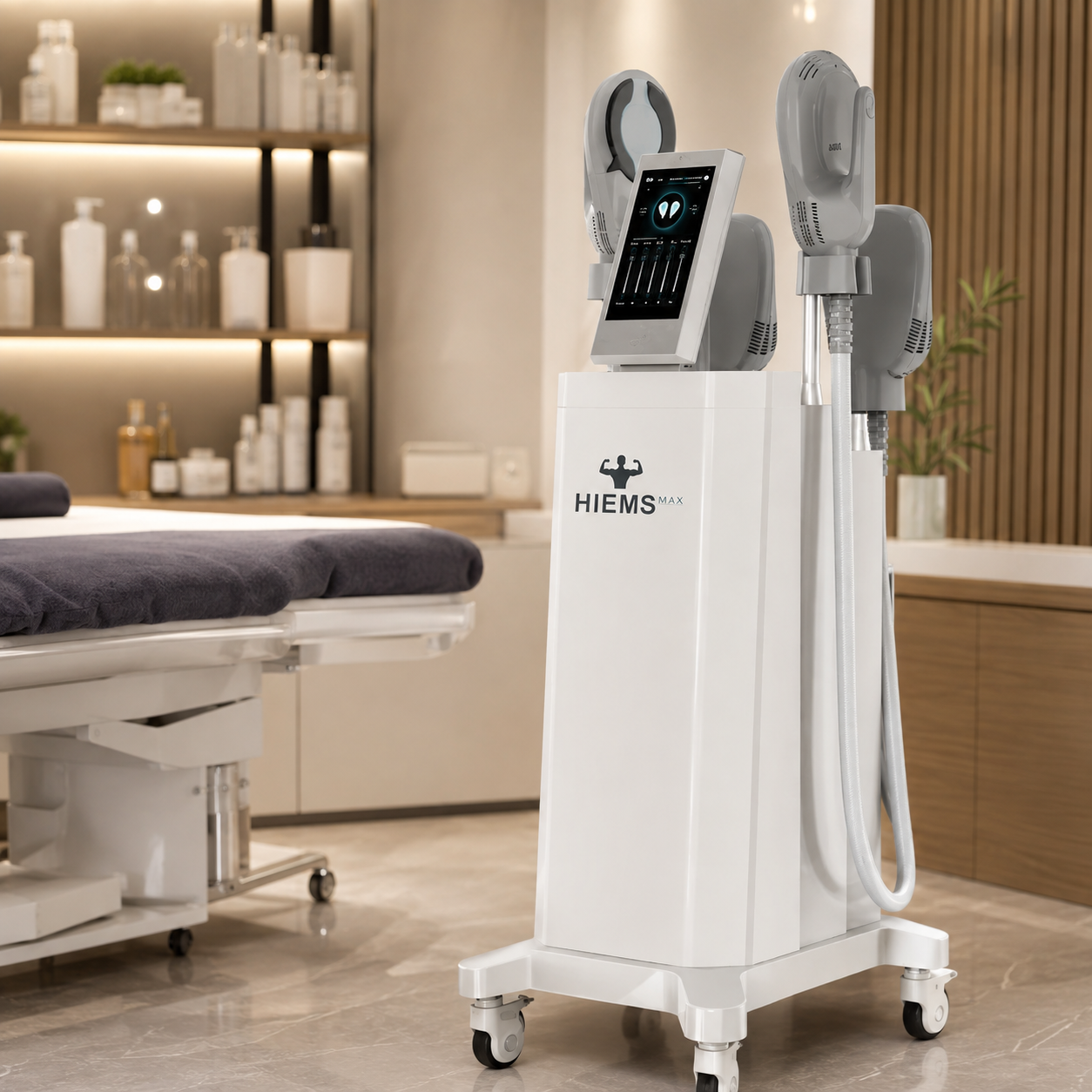
PRODUCT LINK – Hot 4 Handles EMS HIEMT Muscle Building Fat Reduce | Body Sculpting Machine
HIFEM vs. HIFEM+ vs. HIFEM+RF (Neo-Type) Machines
| Technology | What It Does | Best For |
|---|---|---|
| HIFEM (base) | Muscle contraction only | Muscle toning, budget-conscious clinics |
| HIFEM+ | Higher magnetic output, stronger contractions | Clinics wanting faster visible results |
| HIFEM + RF | Adds radiofrequency heating for simultaneous fat breakdown | Clinics offering combined muscle + fat reduction, matching the Emsculpt Neo model |
Types of Emsculpt-Style Machines on the Market
Original Emsculpt®/Emsculpt Neo® (BTL Industries)
This is the branded original, sold only through BTL’s direct sales channel to licensed medical providers. It carries the highest price tag and the strongest name recognition, but it is not available for OEM sourcing or private-label resale.
OEM/Private-Label HIFEM Machines
This is the category most clinics, salons, and distributors actually buy from. Reputable manufacturers build machines using the same underlying engineering principles, focused electromagnetic coils, control boards, cooling systems, and allow distributors to brand the unit under their own name. This is where Ojan Beauty operates: we manufacture the hardware, then apply your logo, packaging, and documentation for resale.
Low-Cost Clone Machines: What to Watch For
Below the OEM tier sits a flood of unbranded units sold on marketplaces with almost no verifiable specifications. Common issues we see when we test competitor units:
- No published magnetic flux density, so you cannot compare real power output
- No CE, FDA, or ISO 13485 test reports available on request
- Thin, poorly insulated coils that overheat during back-to-back sessions
- No warranty, or a warranty the seller has no intention of honoring
- The same physical shell resold under a different brand name every few months
If a seller cannot produce a certificate number you can independently verify, treat the listed specs as marketing copy, not engineering data.
Comparison Table: What to Check Before You Buy
| Factor | Branded Clinical (BTL) | OEM/Private Label | Clone/Unverified |
|---|---|---|---|
| Certifications | FDA-cleared | CE/FDA/ISO 13485 verifiable | Often unverifiable |
| RF option | Yes (Neo) | Often available | Rarely disclosed |
| Warranty | Manufacturer-backed | 1 to 2 years typical | Little to none |
| OEM/private label | Not available | Yes | N/A |
| MOQ for resale | N/A | Often 1 unit | Varies, low trust |
| Documentation for resale | N/A | Provided | Rarely provided |
Emsculpt Machine Cost: Real Price Breakdown by Tier

Branded Clinical-Grade Machines
Original BTL Emsculpt and Emsculpt Neo units typically run from the low six figures upward when purchased new, with refurbished units selling at a discount. These prices reflect brand licensing, direct sales support, and FDA clearance under BTL’s own regulatory filings.
Professional OEM/Private-Label Machines
This is the realistic range for most clinics, med spas, and distributors: a well-built HIFEM or HIFEM+RF machine from a vetted manufacturer generally costs a fraction of the branded price while using comparable coil and RF technology. Pricing depends on the number of handles (1, 2, or 4), whether RF is included, and order volume. Distributors buying in bulk typically negotiate per-unit discounts.
Personal/Home-Use HIFEM Devices
Smaller, lower-power personal units exist for at-home use. They are meaningfully weaker than clinical machines and are better suited to maintenance between professional sessions than as a replacement for them.
Total Cost of Ownership: Beyond the Machine Price
For importers and resellers, the sticker price is only part of the equation. Budget for:
- Shipping terms: FOB, CIF, or DDP pricing changes who handles freight and duties
- Import duties and taxes, which vary by destination country
- Staff training and certification, often included by reputable OEM suppliers
- Consumables and spare parts, such as applicator pads and cables
- Annual service and maintenance, typically a small percentage of the unit price per year
How to Choose a Reliable Emsculpt Machine Supplier
Certifications to Verify
Ask for CE, FDA, and ISO 13485 documentation, then request the certificate or registration number so you can check it against the issuing body’s public database rather than trusting a badge image on a website.
Factory Audit and Manufacturing Transparency
A legitimate manufacturer should be willing to share production footage, component sourcing details, and quality-control testing reports. If a supplier won’t show you where the machine is actually built, that’s a signal to keep looking.
OEM/ODM and Private-Label Services
For distributors, ask specifically about logo customization, packaging design, minimum order quantities, and whether the supplier provides white-label documentation (manuals, IFUs, certificates) you can hand to your own downstream customers.
Warranty, After-Sales Support, and Spare Parts
A real warranty should specify what’s covered, for how long, and what the response time looks like when something breaks. Distributors especially need confirmed spare-parts availability, since you’ll be the one fielding support calls from clinics in your territory.
Shipping, Documentation, and Import Compliance
Confirm the supplier can provide the export paperwork your customs office will require, and clarify incoterms up front so there are no surprises on landed cost.
Red Flags Checklist
- No verifiable certificate numbers
- Reluctance to share factory video or address
- Price far below every competing OEM quote with no explanation
- No written warranty terms
- Pressure to pay in full before any documentation is shared
Emsculpt Machine Specifications Buyers Should Compare

- Magnetic flux density/power output: the core driver of contraction intensity
- Number and type of applicators: flat handles for abdomen/buttocks, curved handles for arms/legs
- Cooling system and duty cycle: determines how many back-to-back sessions the unit can run without overheating
- Control interface and presets: easier training and more consistent sessions for staff
- Safety features: automatic shut-off and skin-contact sensors
Who Should Buy an Emsculpt Machine?
Medspas and clinics use it as a flagship non-invasive body contouring service with strong per-session margins. Salons expanding beyond skincare often add a single- or dual-handle unit to widen their service menu without hiring medical staff. Distributors and wholesalers build a private-label product line around OEM units, supplying clinics across their region. Home users choose lower-power personal devices for maintenance between professional treatments, not as a full replacement.
ROI and Business Case for Clinics and Distributors
For clinics, a single machine typically supports 6 to 8 treatment sessions per working day. At common per-session pricing, many practices recover their equipment investment within 12 to 24 months, faster with strong local marketing and repeat-package sales. For distributors, margin comes from volume: OEM units bought at wholesale pricing and resold to regional clinics, bundled with training and after-sales support, create a repeatable revenue stream beyond the one-time equipment sale.
Safety, Contraindications, and Regulatory Considerations
HIFEM treatment is not appropriate for everyone. Pregnant patients, individuals with pacemakers or other implanted electronic devices, and those with certain metal implants in the treatment area should not be treated. Distributors and resellers carry a responsibility here too: every unit sold should come with manufacturer Instructions for Use (IFU) documentation that clearly lists contraindications, and that documentation should be passed along to the end clinic, not left in a box.
FAQs About Emsculpt Machine
Original branded BTL units run into six figures. OEM/private-label machines with comparable HIFEM or HIFEM+RF technology cost a fraction of that, with pricing scaling by handle count, RF inclusion, and order volume.
Emsculpt is BTL Industries’ registered brand name for its specific device. HIFEM is the underlying technology category. Many manufacturers, including private-label OEM suppliers, build machines using the same electromagnetic principle.
Yes, provided the machine is properly certified (CE, FDA, or the equivalent in your destination market) and does not misuse the trademarked “Emsculpt” name. Always confirm your supplier’s certification documentation before importing.
A well-built unit with proper maintenance generally lasts several years of regular clinical use, with coils and control boards being the most common components needing eventual servicing.
Ask for verifiable certificate numbers, factory audit access, sample warranty terms, MOQ pricing tiers, and confirmation that IFU/training documentation will be included for resale.
Wrapping It Up
Choosing an Emsculpt-style machine comes down to three things: understanding what HIFEM technology can realistically deliver, knowing which price tier actually matches the quality you’re paying for, and vetting your supplier before money changes hands. Skip any one of these steps and you risk overpaying, underdelivering for your clients, or getting stuck with a machine no one can service.
At Ojan Beauty, we’d rather you ask hard questions upfront than discover problems after the container arrives. Whether you’re outfitting a single clinic or building a private-label line for distribution, our export team can walk you through specs, certifications, and pricing so you can compare us honestly against anyone else in the market.
Ready to compare specs and pricing? Request a wholesale quote from our export team or explore our current HIEMT EMS body Muscle Sculpting range.